Inquiry Basket
| Your inquiry basket is currently empty. |
In the fast-paced fields of reticular chemistry and materials science, waiting for large single crystals to grow is often the bottleneck that stalls innovation. Conventional Single-Crystal X-ray Diffraction (SC-XRD) requires crystals of significant size and quality—a luxury not always available for novel synthesized materials.
Creative Biostructure removes this hurdle. Leveraging our advanced Microcrystal Electron Diffraction (MicroED) platform, we provide a definitive structural determination solution for samples that are too small for X-ray (< 1 µm) or only available as microcrystalline powders. By utilizing the strong interaction between electrons and matter, we can determine the 3D atomic structure of MOFs, COFs, Zeolites, and organic small molecules with speed, precision, and minimal sample volume.
Unlike X-rays, electrons interact with matter roughly 10,000 times more strongly. This physical property allows MicroED to yield high-quality diffraction data from nanocrystals as small as 100 nm—sizes that would produce zero signal in a standard X-ray diffractometer.
We bridge the gap between powder diffraction (which often yields ambiguous results) and single-crystal diffraction, offering a direct "visual" of the atomic lattice, bonding connectivity, and pore architecture.
Key Capabilities
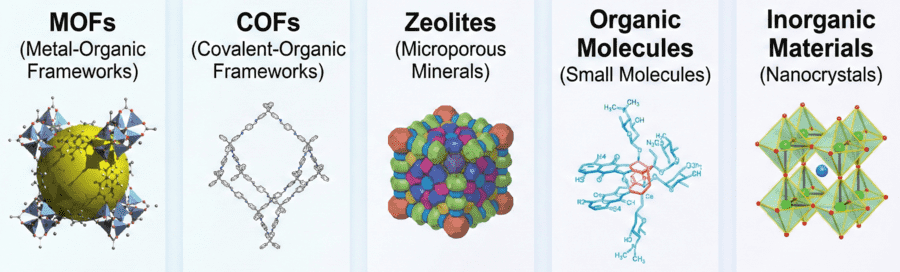 Figure 1. Schematic overview of MicroED applications in new-material structure identification. (Creative Biostructure)
Our interdisciplinary team adapts data collection strategies based on the specific beam sensitivity and vacuum stability of your material.
| Porous Frameworks (MOFs, COFs, HOFs) | Metal-Organic Frameworks and Covalent-Organic Frameworks often crystallize as micro-powders. We specialize in:
|
| Advanced Nanomaterials (MXenes & Zeolites) | For inorganic materials and 2D functionalized sheets (like graphene derivatives or MXenes), MicroED provides insights into layer stacking and surface terminations that are difficult to resolve via TEM imaging alone. |
| Pharmaceutical Small Molecules | Rapidly determine the 3D structure of Active Pharmaceutical Ingredients (APIs) directly from reaction mixtures.
|
We have streamlined the MicroED process to ensure the fastest turnaround time (Standard delivery: 10-15 business days).
You send the sample; we perform an initial TEM check to evaluate crystal quality and beam tolerance. Note: If crystals are unsuitable, we stop here to save your costs.
Nanocrystals are deposited on grids. For air-sensitive materials, we utilize inert-gas glovebox loading and vacuum transfer holders to prevent oxidation/hydrolysis.
Automated collection of tilt-series diffraction patterns using low-dose protocols.
Our crystallographers process the reciprocal space data, phase the structure, and refine the atomic model against the diffraction data.
Delivery of the solved structure (CIF format), refinement statistics, and a comprehensive analysis report suitable for supplementary information in top-tier journals.
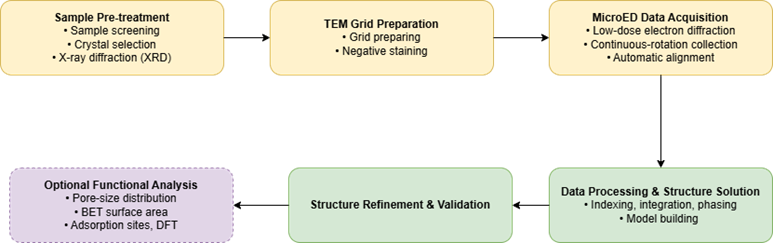 Figure 2. MicroED Project Workflow. (Creative Biostructure)
Q1: My MOF is extremely sensitive to the electron beam. Can you solve it?
Yes. This is our specialty. We utilize Cryo-EM techniques (cooling the sample to liquid nitrogen temperatures) combined with ultra-fast continuous rotation data collection. This minimizes radiation damage, allowing us to capture high-resolution data before the crystal lattice degrades.
Q2: Do I need to crystallize my sample specifically for MicroED?
Generally, no. If you have a powder that looks crystalline under a light microscope (or shows peaks in Powder XRD), it is likely suitable. We work with the "dust" that remains on the sides of your reaction vial.
Q3: How does this compare to Powder X-ray Diffraction (PXRD)?
PXRD collapses 3D data into 1D peaks, leading to peak overlap and ambiguity in complex structures. MicroED preserves the 3D diffraction spots, allowing for ab initio structure determination rather than just "fingerprinting" known structures.
Background
A specific 2:1 co-crystal of 2-aminopyrimidine (2AP) and succinic acid (SA) could only be synthesized via mechanical grinding, yielding micro-powders unsuitable for Single-Crystal X-ray Diffraction (SCXRD). Traditional solution methods failed, consistently reverting to a thermodynamic 1:1 form, leaving the 2:1 structure unsolved.
Methods
MicroED was applied directly to the ground powder using ultra-low dose Cryo-TEM at 79 K. Diffraction data from 14 individual nanocrystals were merged to achieve a complete ab initio structure solution.
Results
Conclusion
MicroED is the only viable tool for characterizing "mechano-distinctive" materials. It enables the validation and IP protection of novel solid-state forms that are physically impossible to crystallize using standard techniques.
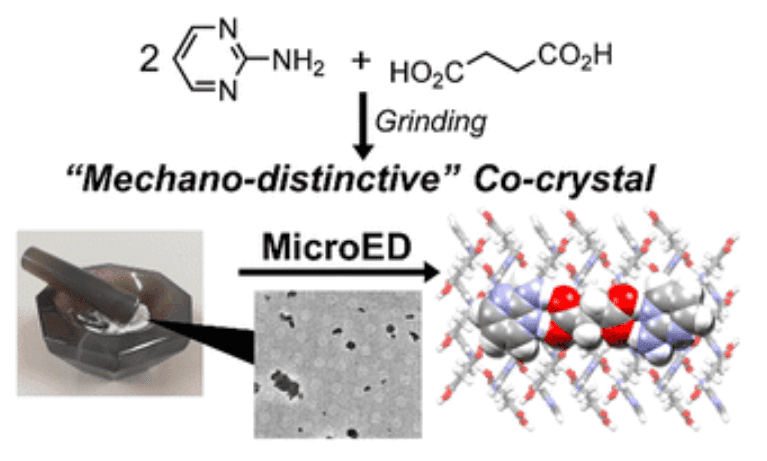 Figure 3. MicroED Structure Determination of a Mechanochemically Synthesized Co-Crystal. (Sasaki T, et al., 2023)
Creative Biostructure promises to work closely with our customers to provide tailored EM strategies for the New‑Material. MicroED provides an efficient and reliable structural analysis platform for new‑material discovery, performance optimization, and patent strategy. Please feel free to contact us for a detailed quote.
References
Easy access to products and services you need from.











For Research or Industrial Raw Materials, Not for Personal Use!