Inquiry Basket
| Your inquiry basket is currently empty. |
Explore ready-to-use liposomes, lipids, preparation tools, and lipid nanoparticle products organized around your payload and application.
Liposomes are spherical vesicles composed of one or more phospholipid bilayers surrounding an aqueous core. This structure allows hydrophilic compounds to be carried in the internal aqueous phase and lipophilic compounds to be incorporated within the lipid bilayer, making liposomes versatile delivery and formulation systems.
Liposome performance is influenced by lipid composition, particle size, lamellarity, surface charge, encapsulated payload, and surface modification. These properties can affect stability, loading efficiency, release behavior, biological interactions, and suitability for pharmaceutical, cosmetic, food, and fundamental research applications.
Creative Biostructure organizes its liposome portfolio by application, encapsulated ingredient or payload, and formulation-related need. Researchers can compare ready-to-use products, formulation components, preparation tools, lipid nanoparticles, and encapsulation kits, or request a custom feasibility review when predefined specifications do not meet the study objective.

Ready-to-use vesicles and lipid systems for delivery, assay development, membrane studies, and method validation.

Active-loaded liposomes designed to support skincare and cosmetic formulation research.

Food-grade liposomal ingredients for formulation, stability, and bioavailability research.
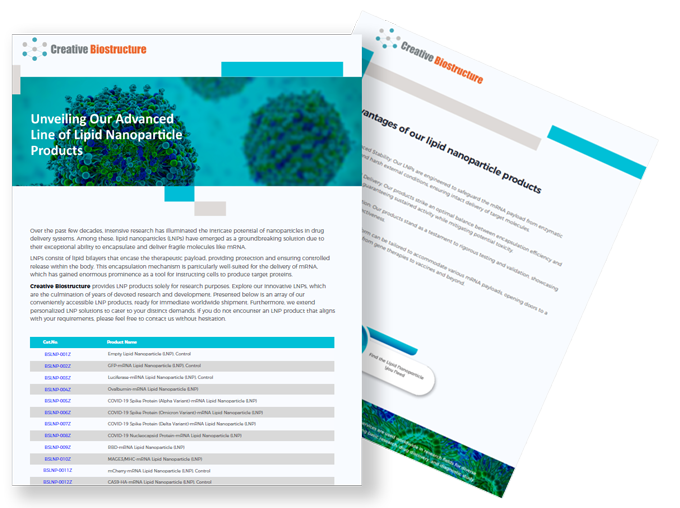
Find the essential products for preparing and developing liposome formulations, including preparation kits, membrane filters, lipids, lipid nanoparticles, and encapsulation kits.
Narrow the catalog by the ingredient or payload you need to encapsulate, from drugs, RNA, and proteins to vitamins, minerals, cosmetic actives, and food ingredients.
Use a catalog number, product name, or application keyword to search products selected from recent customer inquiries.
Tell us your payload, target size, lipid preference, application, and analytical requirements.
The Mempro™ Liposome Platform supports industry and academic teams from manufacturing through analysis. Match an available product to your study or define a custom project with fit-for-purpose characterization.
Explore the Liposome Platform ↗An independent Langmuir study combined molecular simulations with DOPC-based formulations to examine how secondary-lipid headgroups influence bilayer stiffness, particle properties, and cell-dependent internalization.
Research question
Liposome mechanics can affect circulation, tissue penetration, and cellular internalization, yet the contribution of lipid headgroup chemistry is not always considered during formulation selection. The researchers asked how five saturated 18-carbon secondary lipids—DSPG, DSPA, DSPS, DSPC, and DSPE—alter DOPC bilayer stiffness and how selected formulations behave in normal epithelial and metastatic breast-cancer cells.
The study shows that nominal lipid identity alone is not sufficient. Headgroup chemistry, molar ratio, particle size, surface charge, diffusivity, and membrane mechanics can act together to influence biological performance.
Experimental workflow
All-atom CHARMM36/NAMD and coarse-grained Martini/GROMACS simulations evaluated DOPC with DSPG, DSPA, DSPS, DSPC, or DSPE across multiple molar ratios.
Area compressibility, lipid order, mixing behavior, contacts, and electrostatic potential were assessed; density-functional calculations supported headgroup-level interpretation.
Pure DOPC, DOPC/DSPG, and DOPC/DSPA liposomes were synthesized by solvent injection, with the mixed formulations prepared at 85:15 mol/mol.
Dynamic light scattering and zeta-potential measurements were paired with flow-cytometric uptake studies in EpH4-Ev normal epithelial cells and 4T1 metastatic breast-cancer cells.
Key findings
| Formulation | Effective diameter | Zeta potential |
|---|---|---|
| L-DOPC | 72 ± 2 nm | +2.4 ± 0.1 mV |
| L-DOPC/DSPG (85:15) | 81 ± 1 nm | −27 ± 1 mV |
| L-DOPC/DSPA (85:15) | 102 ± 3 nm | −36 ± 1 mV |
At a given composition, the simulated stiffness trend was DSPG < DSPA < DSPS < DSPC < DSPE, except at 95:5 where values were statistically similar to pure DOPC. The examined 65:35 systems showed no evidence of phase separation or inhomogeneity.
Study takeaway
The work supports using secondary-lipid headgroup chemistry and composition to tune DOPC bilayer mechanics. Cellular uptake did not follow stiffness alone: the authors interpreted the results as a combined effect of mechanical properties, negative surface charge, effective diameter, and diffusivity.
The maximum simulated stiffness reduction was modest, and the in vitro comparison covered three selected formulations and two mouse cell lines. The authors call for broader experimental mechanical validation before generalizing performance across payloads, routes, or biological models.
Peer-reviewed source
Xu, J.; Adepoju, S.; Pandey, S.; Pérez Tetuán, J.; Williams, M.; Abdelmessih, R. G.; Auguste, D. T.; Hung, F. R. “Effects of Lipid Headgroups on the Mechanical Properties and In Vitro Cellular Internalization of Liposomes.” Langmuir 2025, 41 (4), 2600–2618.
View article via DOIDOI: 10.1021/acs.langmuir.4c04363
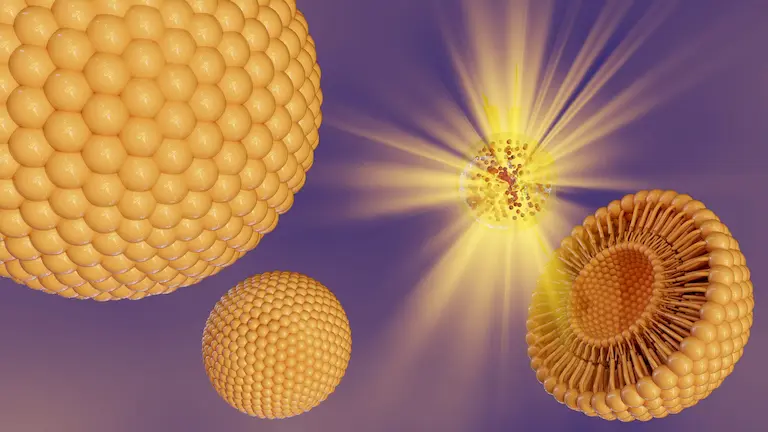
Small molecules, oligonucleotides, recombinant proteins, and other research payloads.
Encapsulation of vitamins, peptides, organic acids, botanical extracts, and active complexes.
Food-grade liposomal minerals, vitamins, peptides, and bioactive ingredients.

Cell interaction, recognition, membrane behavior, and delivery-mechanism studies.
Product requirements depend on composition, payload, application, and analytical needs. A short scientific review is the fastest way to identify an available product or define a custom route.
Contact the Creative Biostructure sales team through the online inquiry form. Minimum order quantity varies by product and project requirements; the team will confirm the applicable specification and ordering information.
Our scientists work with defined physical and chemical parameters and can support characterization during manufacturing. Available documentation and testing scope should be confirmed for the selected product or custom project.
Yes. Depending on the project, customization may include vesicle size, lipid composition, encapsulated payload, surface properties, or release profile. Share your target application and acceptance criteria for feasibility review.
Choose an off-the-shelf product when its composition and intended application align with your study. A custom project is more suitable when you need a specific payload, lipid ratio, size distribution, surface modification, or analytical package.
These peer-reviewed publications provide traceable context for liposome characterization, nanomedicine delivery, and formulation design.
Andronico, L. A., Jiang, Y., Jung, S.-R., Fujimoto, B. S., Vojtech, L., & Chiu, D. T. (2021). Analytical Chemistry, 93(14), 5897–5905.
The study used Creative Biostructure B-Lipo as defined reference material while developing a membrane-dye workflow for single-vesicle sizing and validating measurements against cryo-EM.
Vitetta, L., Henson, J. D., Hayes, E., Rutolo, D., & Hall, S. (2025). Pharmaceuticals, 18(9), 1385.
This review examines nanoparticle-enabled drug delivery—including liposomal approaches—as a strategy to improve targeting and address bioavailability limitations associated with oral administration and first-pass metabolism.
Xu, J., Adepoju, S., Pandey, S., et al. (2025). Langmuir, 41(4), 2600–2618.
Combining molecular simulations with synthesized DOPC-based formulations, the researchers showed that lipid headgroup identity influences membrane mechanics and cell-dependent liposome internalization.
Browse product guides and practical background materials from the existing liposome resource library.


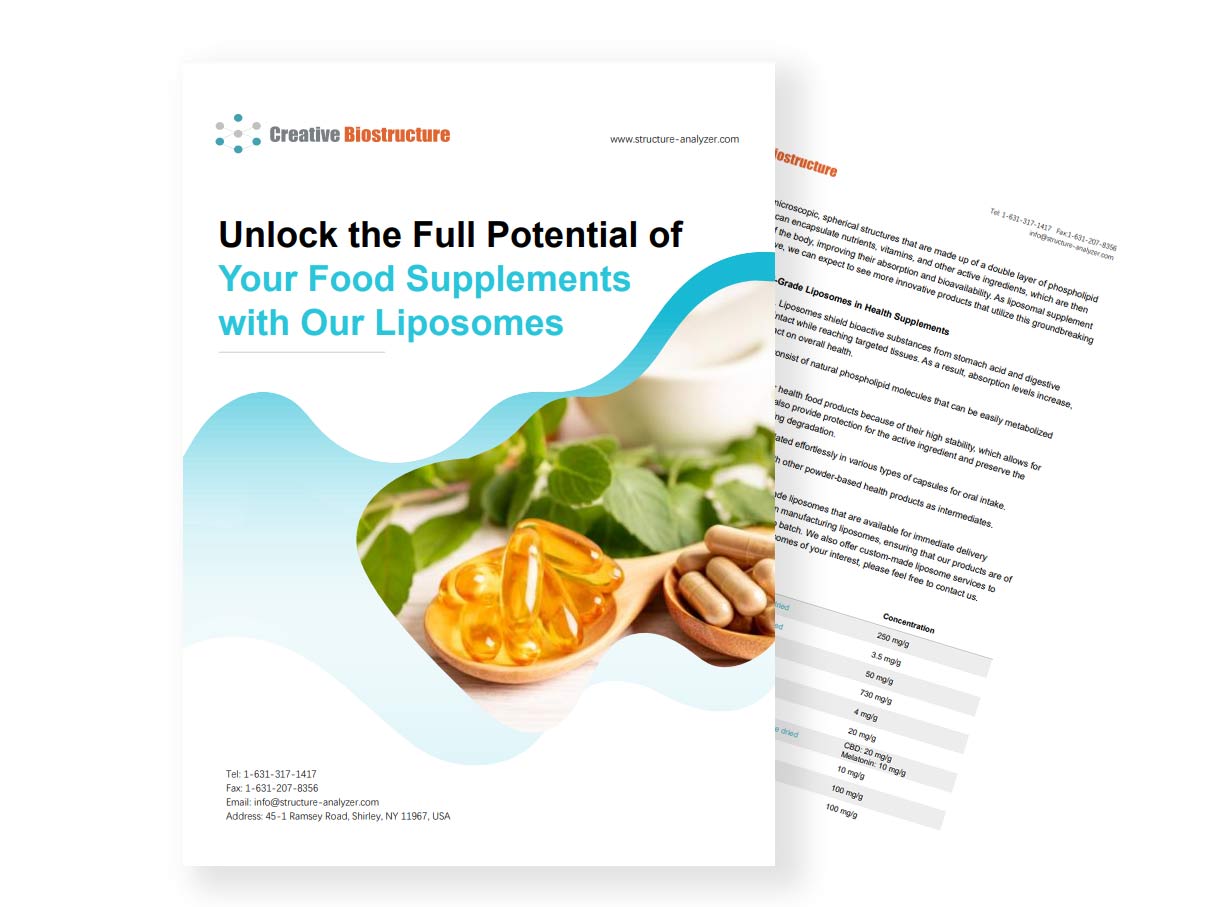










For Research or Industrial Raw Materials, Not for Personal Use!