Inquiry Basket
| Your inquiry basket is currently empty. |
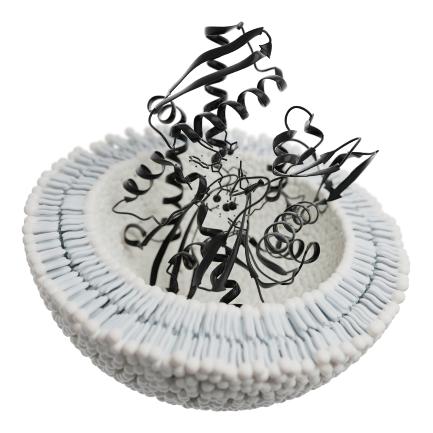
Exosomes are nanosized extracellular vesicles that facilitate intercellular communication and play significant roles in biomarker discovery and therapeutic development. Their involvement in various physiological and pathological processes has attracted considerable interest in the scientific community.
The study of exosomes is expanding rapidly, with ongoing research focused on understanding their biogenesis, cargo composition, and potential clinical applications. Advances in exosome research hold promise for new diagnostic tools and innovative therapeutic strategies.
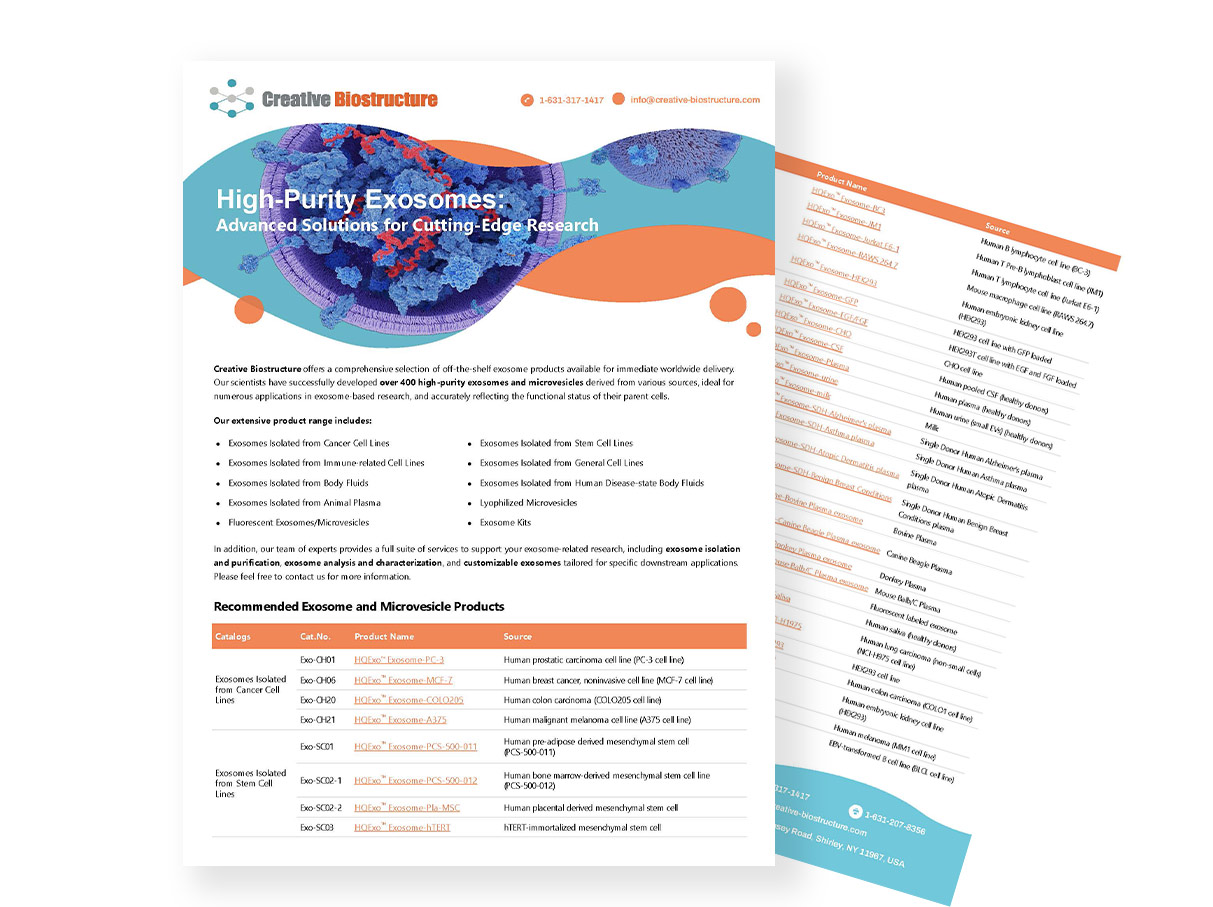
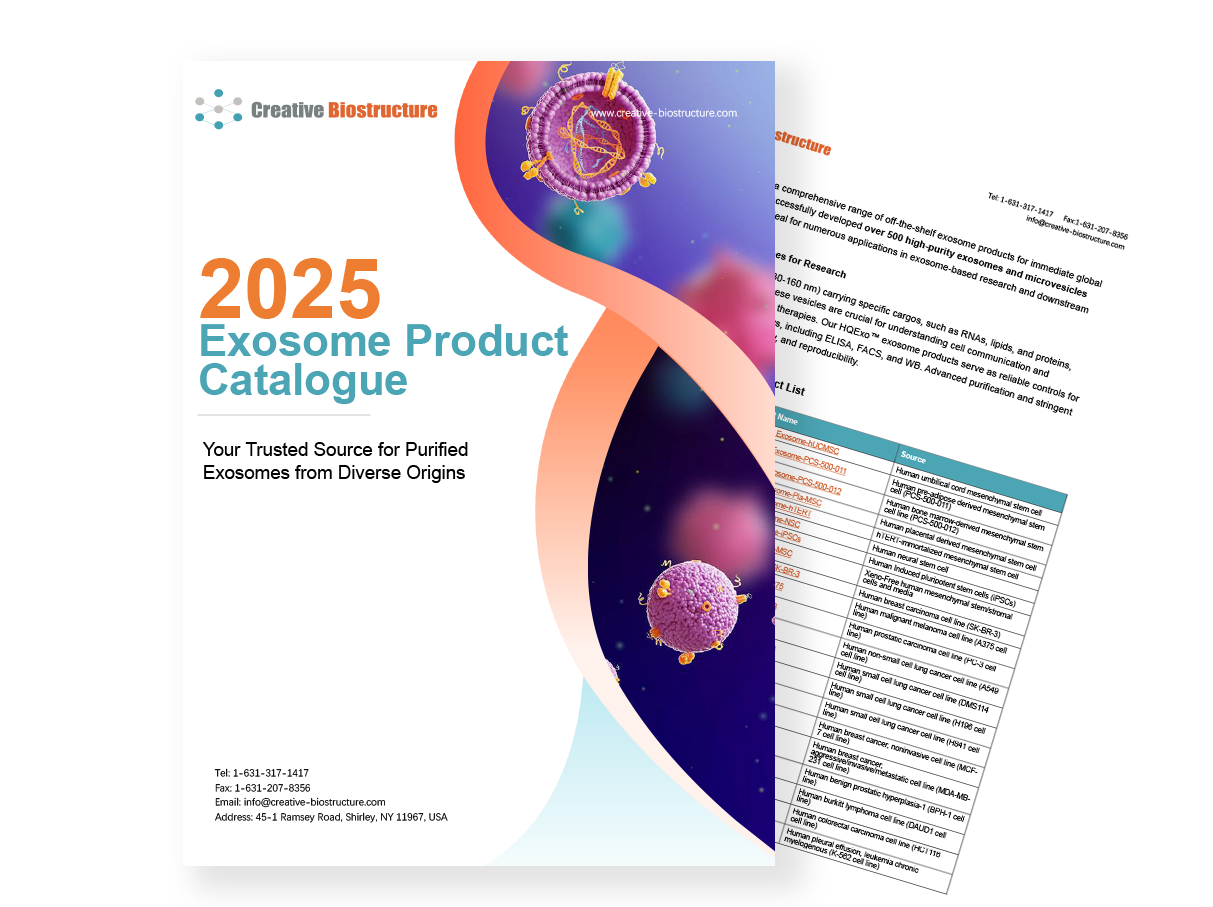
At Creative Biostructure, we offer a comprehensive selection of exosome research products to support your studies. Our offerings include exosomes isolated from animal plasma, stem cell lines, immune-related cell lines, general cell lines, body fluids and plant sources. We also offer exosomes derived from healthy and diseased exosomes, including cancer cell lines, to enhance disease research. For added convenience, our lyophilized exosomes provide greater stability for transport and long-term storage, while our fluorescently labeled exosomes enable easy visualization and tracking of exosomes and microvesicles.
These exosomes can be used as controls for research applications, such as flow cytometry (FACS), Western blotting (WB), and enzyme-linked immunosorbent assay (ELISA). They provide quantitative calibration of exosomes in biological samples, ensuring experimental consistency, improving data interpretation, and supporting regulatory compliance to advance your research.
| Cat.No. | Product Name | Source | Inquiry |
|---|---|---|---|
| EV-H-030 | Single Donor Human Diabetes Plasma Exosome | Inquiry | |
| Exo-BF01 | HQExo™ Exosome-CSF | Exosome derived from human pooled CSF (healthy donors) | Inquiry |
| Exo-BF02 | HQExo™ Exosome-Plasma | Exosome derived from human plasma (healthy donors) | Inquiry |
| Exo-BF03 | HQExo™ Exosome-urine | Exosome derived from human urine (small EVs) (healthy donors) | Inquiry |
| Exo-BF04 | HQExo™ Exosome-serum | Exosome derived from human serum (small EVs) (healthy donors) | Inquiry |
| Exo-BF05 | HQExo™ Exosome-milk | Exosome derived from milk | Inquiry |
| Exo-BF06 | HQExo™ Exosome-saliva | Exosome derived from human saliva (healthy donors) | Inquiry |
| Exo-BF07 | HQExo™ Exosome-Pleural Fluid | Exosome derived from human Pleural Fluid (healthy donors) | Inquiry |
| Exo-BF08 | HQExo™ Exosome-Nasal Fluid exosome | Exosome derived from human Nasal Fluid (healthy donors) | Inquiry |
| Exo-BF09 | HQExo™ Exosome-Sweat exosome | Exosome derived from human Sweat (healthy donors) | Inquiry |
| Exo-BF10 | HQExo™ Exosome-Tears exosome | Exosome derived from human Tears (healthy donors) | Inquiry |
| Exo-BF11 | HQExo™ Exosome-Human breast milk | Exosome derived from Human Breast Milk (healthy donors) | Inquiry |
| Exo-BF12 | HQExo™ Exosome-Human biofluids ascites fluid | Exosome derived from Human Ascites Fluid (healthy donors) | Inquiry |
| Exo-BF13 | HQExo™ Exosome-Human Platelets | Exosome derived from Human Platelets (thrombocytes) | Inquiry |
| Exo-CH01 | HQExo™ Exosome-PC-3 | Exosome derived from human prostatic carcinoma cell line (PC-3 cell line) | Inquiry |
| Exosomes Isolated from Animal Plasma | Exosomes Isolated from Animal Cell Lines | Exosomes Isolated from Body Fluids | Exosomes Isolated from Plants | |
| Source | Circulating blood in animals | Cancer cell lines, stem cell lines, immune-related cell lines, and general cell lines | Various body fluids (e.g., urine, saliva, CSF) | Plant tissues (e.g., leaves, roots, seeds) |
| Composition | Proteins, RNAs, lipids, metabolites (from multiple cell types) | Lipids, proteins, RNAs, cell-specific markers | Lipids, proteins, RNAs, cell-derived markers (from different organs) | Lipids, proteins, RNAs, plant-derived metabolites |
| Heterogeneity | Highly heterogeneous, reflecting systemic responses | Homogeneous, reflecting specific cell type characteristics | Varies based on the body fluid and its cellular origin | Homogeneous within plant type, but can vary between species |
| Isolation Difficulty | Moderate: Requires high-quality plasma and specific separation techniques (e.g., ultracentrifugation, precipitation) | Moderate to High: Requires cultured cells, typically followed by ultracentrifugation or immunoaffinity isolation | High: Difficult due to contamination from other biofluids, requires careful purification (e.g., density gradient, ultrafiltration) | Varies based on plant tissue type and exosome content |
| Research Direction |
|
|
|
|
What are exosome standards used for?
Exosome standards are used as controls for techniques such as FACS, WB, ELISA, and quantitative calibration in biomarker studies. These exosome standards serve as control benchmarks for the quantitative calibration of exosomes in biological samples, ensuring experimental consistency, enhancing data interpretation, and supporting regulatory frameworks.
What is the role of healthy and diseased exosomes in research?
Both healthy and diseased exosomes play critical roles in intercellular communication, disease pathogenesis and therapeutic applications. Their study provides insight into normal cellular functions as well as molecular changes associated with various diseases, making them valuable targets for diagnosis, treatment and drug development.
What form of exosome products do you offer?
We offer exosome products as lyophilized powder/frozen liquid. Lyophilized exosomes are suitable for long-term storage at 4°C and frozen liquid should be stored at -20°C to -80°C. Products should be stored at -20°C or -80°C. Avoid repeated freeze-thaw cycles.
How are fluorescent exosomes used in research?
Fluorescent exosomes are invaluable for tracking exosome uptake and real-time visualization of exosome distribution using fluorescence microscopy, enabling detailed studies of exosome behavior and interaction.
How are your exosomes isolated?
We offer optimized, scalable methods for rapid and reproducible exosome isolation. Our high-throughput solutions, including differential ultracentrifugation (dUC), size-exclusion chromatography (SEC), polymer precipitation, density gradient centrifugation (DGC), immunoaffinity (IA) and microfluidics (MF), support research on exosome heterogeneity and biomarker discovery.

Creative Biostructure offers high-quality exosome standards to support your research. In addition to exosomes for scientific standardization, we provide exosomes tailored for industrial applications, including plant-based exosomes and those for cosmetics. Our comprehensive services encompass exosome isolation, characterization, and engineering, and both in vitro and in vivo functional assays. For more information, explore the links below or contact us directly!
Easy access to products and services you need from.











For Research or Industrial Raw Materials, Not for Personal Use!
 Download Now