Cancer Exosome Research Solutions
Cancer is not just a genetic disease; it is a systemic communication disorder. Tumor-derived exosomes are the key messengers, orchestrating cancer metastasis, immune suppression, and drug resistance.
We provide end-to-end cancer exosome research solutions. Whether you are investigating how pancreatic cancer exosomes initiate pre-metastatic niches or developing a non-invasive exosome prostate cancer test, our platform offers the precise isolation, multi-omics profiling, and functional models you need to unlock the secrets of the tumor microenvironment.
The Dual Role of Exosomes in Cancer Biology
Do exosomes cause cancer? Or are they the key to curing it? Understanding this dual nature is central to our research services.
- Drivers of Disease: Cancer cell exosomes carry oncogenic cargo (e.g., mutant KRAS, miRNAs) that can reprogram nearby cells, suppress the immune system, and prepare distant organs for metastasis (the "pre-metastatic niche").
- Diagnostic Gold Mines: Because they mirror the tumor's molecular state, exosomes are the ideal target for liquid biopsy. Detecting markers like Glypican-1 or specific miRNAs allows for early detection of "silent" killers like pancreatic and lung cancer.
- Therapeutic Vehicles: Beyond their role in disease, engineered exosomes are being developed as cancer vaccines (loading tumor antigens) or drug carriers to target chemotherapy specifically to tumor cells, overcoming multidrug resistance (MDR).
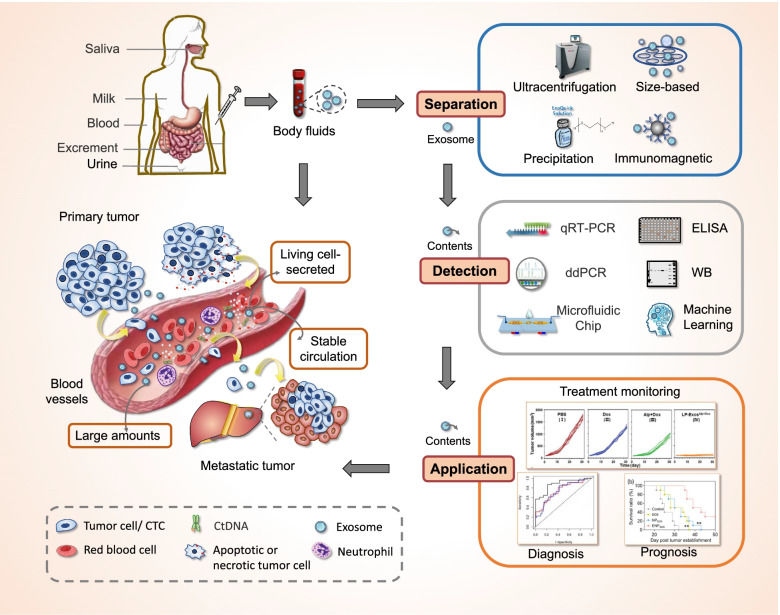
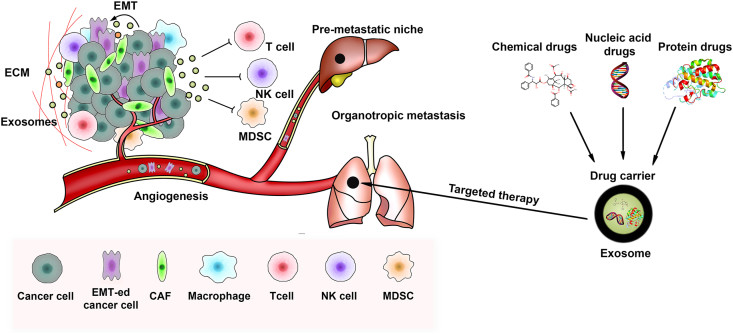 Figure 1. Exosomes in tumor metastasis and targeted therapy. (Liu J, et al., 2021)
Our Integrated Oncology Development Platform
We streamline your oncology pipeline, from isolating rare tumor vesicles to validating their pathological functions.
| Service Pillar | Key Services & Technologies We Provide |
|---|---|
| Tumor Exosome Isolation | Complex Sample Handling: We isolate high-purity exosomes from tumor tissue, plasma/serum, and urine (critical for bladder/prostate cancer). We use Immunoaffinity Capture targeting tumor-specific antigens (e.g., EpCAM) to enrich for cancer-derived vesicles. |
| Oncology Multi-Omics | Biomarker Discovery: We employ NGS and Proteomics to profile the "cancer signature." This includes identifying exosomal miRNA biomarkers (e.g., miR-21, miR-1246) and unique surface proteins (e.g., PD-L1, Glypican-1) that distinguish cancer from inflammation. |
| Functional Modeling | Mechanism Validation: We don't just sequence; we test function. We offer assays for tumor angiogenesis, cell migration/invasion, and immune modulation to prove how your exosomes drive cancer progression. |
| Therapeutic Development | Intervention Strategies: We support the development of exosome-based cancer therapies, including loading chemotherapeutics (e.g., Paclitaxel) into exosomes or developing dendritic cell-derived exosome vaccines. |
Disease-Specific Research Models
Our platform provides validated workflows for the most challenging cancer types found in your research scope.
Oncology Exosome Profiling and Functional Analysis
This is our foundational service for all cancer types. We offer comprehensive multi-omics profiling (Proteomics, NGS) to define the unique "tumor exosome signature." We couple this with robust functional analysis, validating how your exosomes drive tumor proliferation, migration, and immune suppression in the tumor microenvironment.
Pancreatic Cancer Exosome Research
Pancreatic cancer is notoriously difficult to detect. We focus on markers like Glypican-1 (GPC1) and mutant KRAS. We help you investigate how pancreatic cancer exosomes initiate pre-metastatic niche formation in the liver, a key keyword in current research.
Prostate & Bladder Cancer Solutions
Urine is the ideal source for urological cancers. We specialize in exosome urine tests for prostate cancer, isolating vesicles to analyze PCA3 lncRNA or specific gene fusions. For bladder cancer, we profile urinary exosomes to detect recurrence non-invasively.
Breast Cancer Exosome Profiling
We support research into breast cancer metastasis (specifically bone and brain tropism). Our services include profiling HER2+ exosomes and investigating the role of exosomes in mediating chemotherapy resistance in Triple-Negative Breast Cancer (TNBC).
Lung & Colorectal Cancer
From Early detection via plasma miRNA signatures to understanding how colorectal cancer exosomes remodel the liver microenvironment. We provide robust isolation and sequencing services for these high-incidence cancers.
Glioblastoma Exosome Research
Glioblastoma presents unique challenges due to the blood-brain barrier (BBB). We offer specialized workflows to isolate glioma-derived exosomes from cerebrospinal fluid (CSF) and plasma to detect key mutations like EGFRvIII. Our functional assays help you uncover mechanisms of therapeutic resistance and understand how these vesicles drive invasiveness within the neural microenvironment.
Advantages of Our Oncology Platform
Partner with a team that understands the complexity of cancer biology.
Tumor-Specific Enrichment
Tumor exosomes are often drowned out by host exosomes. We use Surface Marker-Based Isolation to selectively capture tumor-derived vesicles, significantly increasing the sensitivity of your sequencing or proteomic analysis.
Pre-Metastatic Niche Models
We have established in vivo models to track exosome organotropism—showing exactly where your tumor exosomes go (liver, lung, bone) and how they prepare the soil for metastasis.
Clinical Translation Focus
We bridge the gap between bench and bedside. Whether you are validating a diagnostic biomarker or developing a cancer immunotherapy exosome, our data packages are designed to support IND-enabling studies and clinical trial applications.
Application Spotlight: Glypican-1 as a Pancreatic Cancer Detector
This analysis highlights the potential of exosomes in early cancer detection, specifically addressing the high-value keyword regarding Glypican-1.
Featured Technologies:
- Tumor Exosome Isolation (Biofluids Isolation)
- Exosomal Protein Marker Analysis
Literature Interpretation:
This landmark study revolutionized the field of pancreatic cancer diagnostics. The challenge was differentiating early-stage pancreatic cancer from benign pancreatitis. Researchers identified a cell surface proteoglycan, Glypican-1 (GPC1), that is specifically enriched on cancer cell exosomes. By isolating GPC1+ exosomes from serum, they could detect pancreatic cancer with 100% specificity and sensitivity, distinguishing it from healthy subjects and patients with benign pancreatic disease.
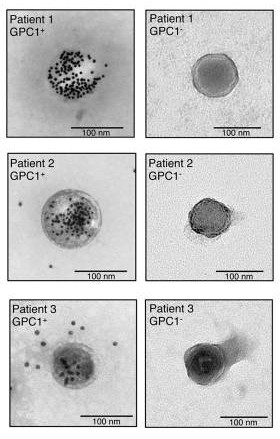 Figure 2. GPC1+ crExos as a biomarker for pancreas cancer. TEM of GPC1 immunogold of crExos from three PDAC patients following flow cytometry isolation of GPC1+ (left column) and GPC1− (right column) crExos. (Melo SA, et al., 2015)
Start Your Cancer Research Project
We make getting started straightforward. Our process is designed to be collaborative and transparent, ensuring your project goals are met at every stage.
How It Works: Our Project Pathway
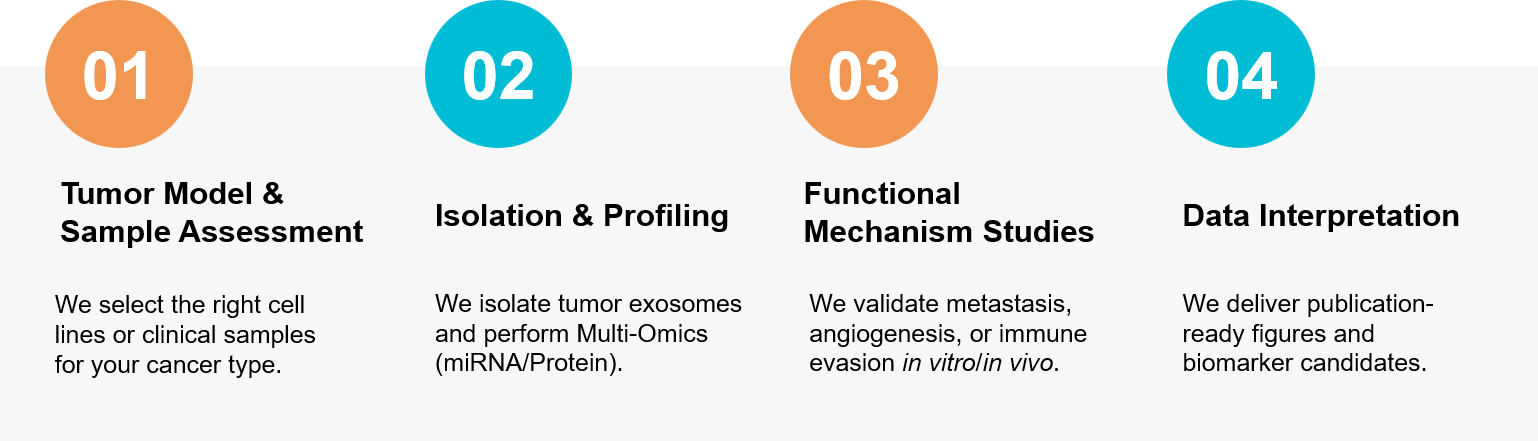 Figure 3. Project workflow for oncology exosome projects, from tumor isolation to functional mechanism validation. (Creative Biostructure)
Ready to advance your oncology pipeline? Our scientific team is available for a free consultation to discuss your exosome cancer strategy.
References
- Liu J, Ren L, Li S, et al. The biology, function, and applications of exosomes in cancer. Acta Pharm Sin B. 2021 Sep;11(9):2783-2797.
- Zhang M, Viennois E, Prasad M, et al. Edible ginger-derived nanoparticles: A novel therapeutic approach for the prevention and treatment of inflammatory bowel disease and colitis-associated cancer. Biomaterials. 2016 Sep;101:321-40.