Exosome-protein Interactions Assay
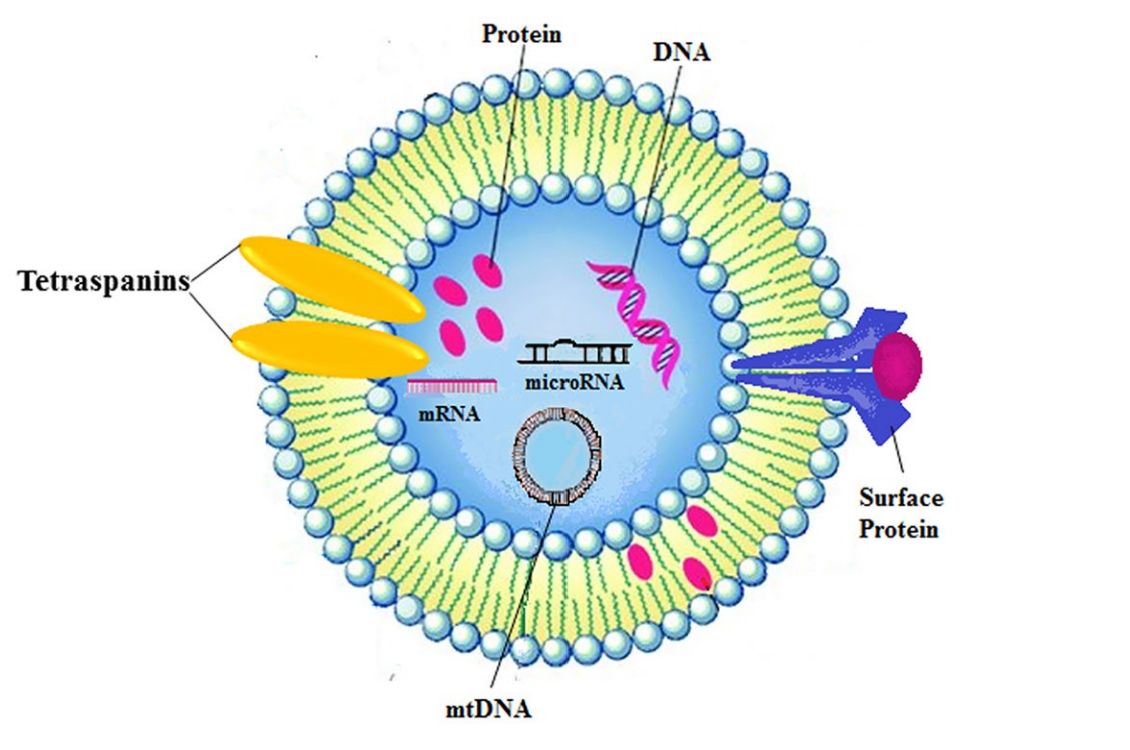
Exosomes mediate cellular communication largely through the exosome surface proteins and exosome cargo proteins they carry. These exosomal proteins interact with recipient cells to trigger downstream signaling pathways. Identifying the specific binding partners of these proteins is fundamental to understanding an exosome's mechanism of action, validating therapeutic targets, and discovering novel biomarkers.
Our Exosome-protein Interactions Assay service is designed to answer one critical question: which specific proteins does my exosome protein interact with? We utilize classic, robust biochemical methods like Co-immunoprecipitation (Co-IP) and GST Pull-down to capture and identify these crucial protein-protein interactions (PPIs).
Why Identify Exosome Protein Interactions?
Simply knowing the exosome protein composition (via proteomics) is not enough. You must prove a direct, physical interaction to validate a functional pathway.
- Elucidate Mechanism of Action: Prove that an exosome surface protein directly binds to a receptor on a target cell, explaining its cellular uptake and targeting specificity.
- Validate Therapeutic Targets: Confirm that an engineered exosome delivering a therapeutic protein successfully engages with its intracellular target.
- Discover Novel Pathways: Identify previously unknown binding partners for a key exosome cargo protein, uncovering new biological functions and signaling cascades.
- Map Functional Complexes: Understand how exosome proteins form larger complexes with cellular machinery to exert their effects.
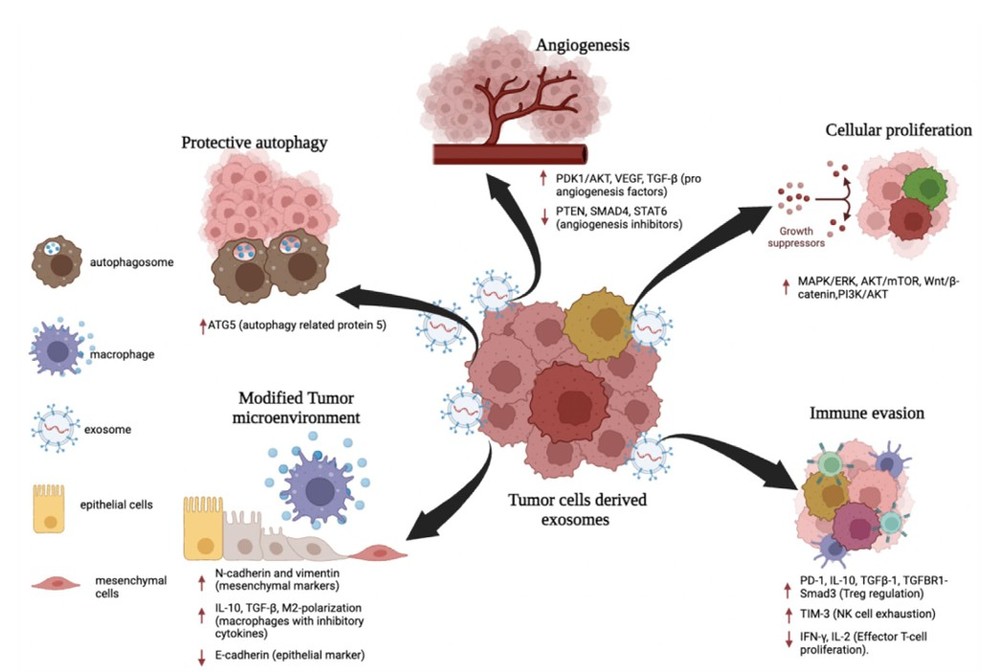
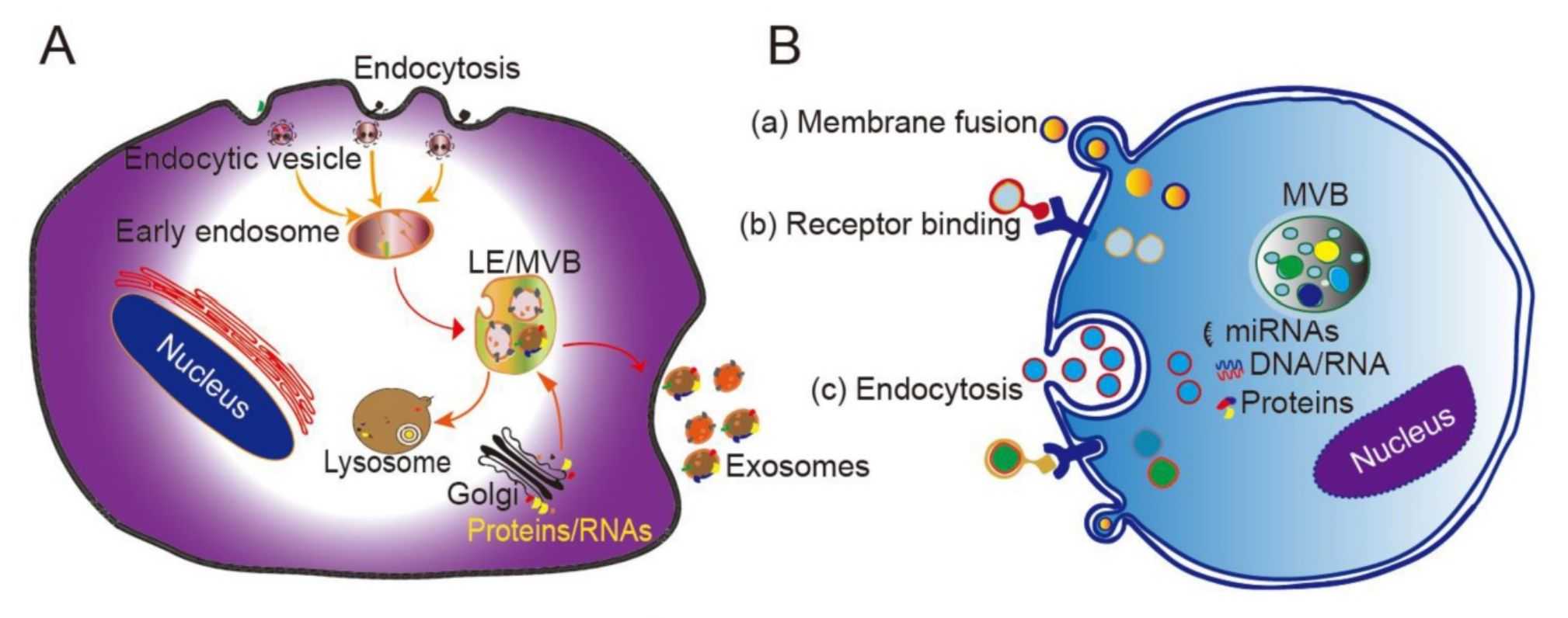
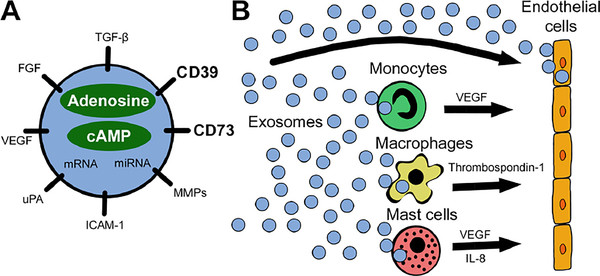 Figure 1. Schematic showing reprogramming of endothelial cells by exosomes, including direct interaction and reprogramming of other cells to release pro-angiogenic factors. (Ludwig N, et al., 2020)
Our Platform for Protein Interaction Analysis
We offer a focused platform of classic, highly-validated biochemical assays to provide definitive proof of a direct protein-protein interaction.
Co-Immunoprecipitation (Co-IP) Assay
Co-IP is the gold-standard method for identifying and validating protein-protein interactions within a cell's native environment.
- Principle: We use an antibody specific to your "bait" protein (e.g., a known exosome marker protein like CD63 protein exosome or an engineered protein) to "pull down" the entire protein complex from a cell lysate. Any interacting "prey" proteins will be pulled down along with it.
- Application: Ideal for studying interactions that occur after exosomes are internalized by a recipient cell. We can analyze the interaction between an exosome cargo protein and its cytosolic binding partners.
- Workflow:
- Treat recipient cells with your exosomes.
- Prepare cell lysates under non-denaturing conditions.
- Incubate lysates with an antibody against your "bait" protein.
- Capture the antibody-protein complexes on Protein A/G beads.
- Wash away non-specific binders.
- Elute and analyze the captured proteins via Western Blot or Mass Spectrometry.
GST Pull-down Assay
The GST Pull-down is a powerful in vitro method to confirm a direct, physical interaction between two purified proteins, free from the complexity of a total cell lysate.
- Principle: Your "bait" protein is expressed as a fusion with Glutathione S-transferase (GST). This GST-tagged protein is immobilized on glutathione-coated beads. A solution containing the purified "prey" protein (e.g., a potential receptor or target) is then passed over the beads.
- Application: Perfect for validating a direct interaction between a purified exosome surface protein and its suspected extracellular receptor, or for confirming a Co-IP result in vitro.
- Workflow:
- Express and purify the GST-tagged "bait" protein and the untagged "prey" protein.
- Immobilize the GST-bait protein on glutathione beads.
- Incubate the beads with the "prey" protein solution.
- Wash away non-specifically bound proteins.
- Elute the specifically bound "prey" protein and analyze via Western Blot.
Our Assay Workflow
Our workflow is structured to provide clear, definitive evidence of a protein-protein interaction, complete with all necessary controls.
Key Stages of Our Service
Strategy & Reagent Preparation
Based on your hypothesis, we select the best method (Co-IP or Pull-down). We then source or generate the required reagents, such as specific antibodies or expression constructs for GST-tagged proteins.
Core Interaction Experiment
We perform the main Co-IP or Pull-down experiment, incubating the "bait" with the potential "prey" under optimized conditions to allow for complex formation.
Stringent Washing & Elution
This is a critical step where we use a series of carefully optimized wash buffers to remove any non-specific or weakly bound proteins, ensuring that only true interactors remain.
Detection & Validation
The final stage is to detect the captured "prey" protein. This is typically done via Western Blot using an antibody specific to the prey, providing clear visual evidence of the interaction.
Our 5-Step Assay Pathway
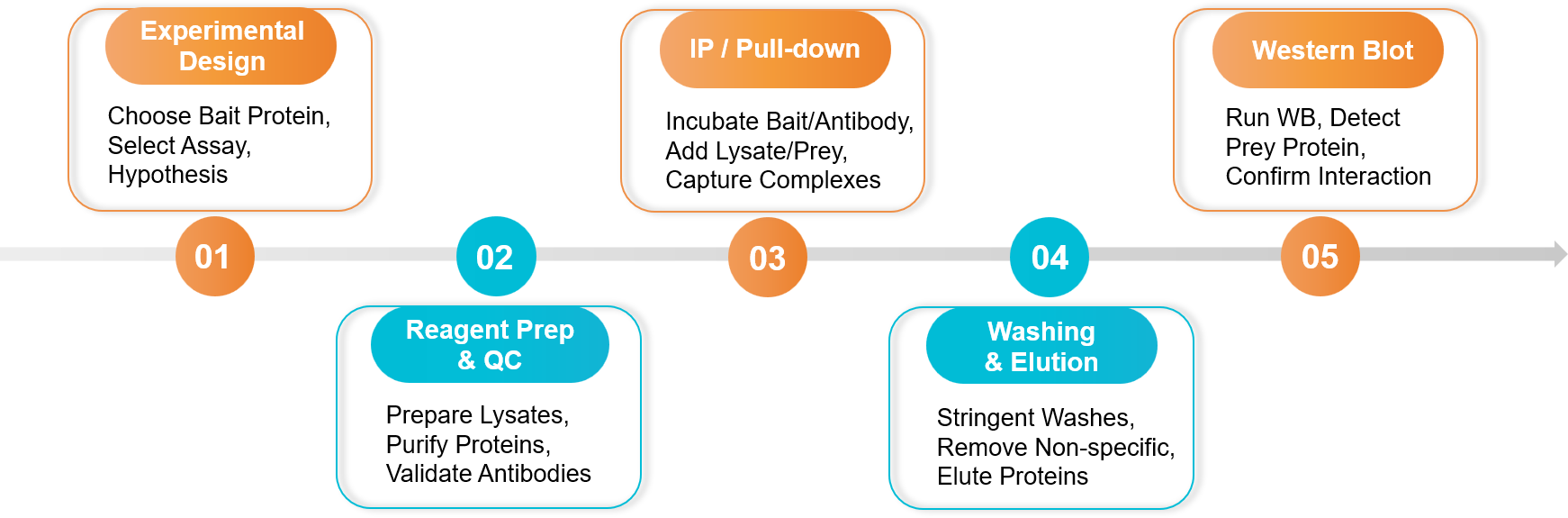 Figure 2. Exosome-protein Interactions Assay Project Workflow. (Creative Biostructure)
Sample Requirements
- For Co-IP:
- Your purified exosome preparation.
- The recipient cell line you wish to test.
- A high-quality, validated antibody against your "bait" protein (or we can source one).
- For GST Pull-down:
- Information (e.g., cDNA sequence) to allow for the expression of your "bait" and "prey" proteins.
- Antibodies: Validated antibodies for the Western Blot detection of both "bait" and "prey" proteins.
Standard Deliverables
- A comprehensive report detailing the experimental protocol, including lysis/wash buffer compositions and antibody information.
- High-resolution, fully annotated images of the final Western Blots, showing the results for your target interaction as well as all necessary controls (e.g., input, IgG control).
- A scientific interpretation of the results, confirming or refuting the protein-protein interaction.
Case Study
Case: Proving an Exosome Biogenesis Protein (GPR143) Interacts with the ESCRT Machinery
Background: Researchers identified a protein, GPR143, that was associated with cancer metastasis. They hypothesized that GPR143 might promote metastasis by controlling the production of exosomes. To do this, it would need to interact with the cell's exosome-making machinery, known as the ESCRT complex. They needed to prove this physical interaction.
Methodology: To prove a direct interaction within the cell, a Co-immunoprecipitation (Co-IP) Assay was performed.
- "Bait" & "Prey": The GPR143 protein was the "bait." The suspected binding partner was HRS, a key protein in the ESCRT complex.
- Co-IP: An antibody specific to GPR143 was used to pull down GPR143-containing protein complexes from cancer cell lysates. A non-specific IgG antibody was used as a negative control.
- Detection: The proteins that were pulled down were analyzed by Western Blot, using an antibody against the "prey" protein, HRS.
Key Findings:
- The Western Blot showed a clear band for the HRS protein in the sample that was immunoprecipitated with the GPR143 antibody.
- Crucially, no HRS band was detected in the negative control sample that used a non-specific IgG antibody.
Conclusion: The Co-IP assay provided definitive proof of a protein-protein interaction. It demonstrated that GPR143 physically associates with the ESCRT protein HRS within the cell. This was the critical molecular evidence needed to validate their hypothesis that GPR143 controls exosome biogenesis by directly engaging with the ESCRT machinery.
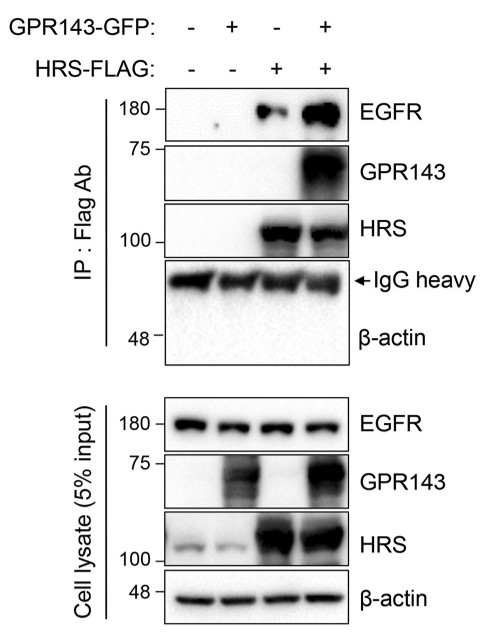 Figure 3. HEK293T cells were cotransfected with GPR143-GFP and HRS-FLAG, and GPR143 formed a complex with EGFR and HRS, with a marked increase in HRS-EGFR interaction upon GPR143 overexpression. (Lee YJ, et al., 2023)
Ready to pinpoint your exosome protein binding partners? Our experts design and execute Co-IP and GST pull-down studies with the right controls to deliver definitive interaction evidence and mechanism insight. Contact us for a free consultation and an assay plan tailored to your targets.
References
- Ludwig N, Jackson EK, Whiteside TL. Role of exosome-associated adenosine in promoting angiogenesis. Vessel Plus. 2020;4:8.
- Lee YJ, Shin KJ, Jang HJ, et al. GPR143 controls ESCRT-dependent exosome biogenesis and promotes cancer metastasis. Dev Cell. 2023 Feb 27;58(4):320-334.e8.
Frequently Asked Questions
For any inquiries, our support team is ready to help you get technical support for your research and maximize your experience with Creative Biostructure.