
Exosome Functional Assays for Validating Biological Activity and Therapeutic Potential
Need to validate the therapeutic potential and biological function of your exosomes? Creative Biostructure offers a comprehensive suite of exosome functional assays. Our platform spans from standard in vitro and in vivo analysis to advanced 3D skin and organoid models, providing robust data for drug delivery, immunomodulation, and biomarker discovery.
Exosome Functional Assays Trusted by Global Innovators in Therapeutic Research
Creative Biostructure provides expert exosome functional assays trusted by academia, biotech, and pharma to validate the biological function of exosomes and accelerate therapeutic development.






Why is Determining Exosome Function Crucial?
Understanding what exosomes are is only the first step. Understanding what they do is what drives scientific breakthroughs. A thorough investigation into exosome functions is essential for:
- • Validating Therapeutic Potential: Confirming that your exosomes of interest have the desired biological effect (e.g., anti-inflammatory, regenerative) is a prerequisite for any pre-clinical development.
- • Uncovering Disease Mechanisms: Investigating the functions of exosomes in cancer, neurodegeneration, and other diseases reveals how these vesicles contribute to pathogenesis, opening new avenues for treatment.
- • Discovering Biomarkers: Linking a specific exosome function to a disease state can lead to the development of novel functional biomarkers for diagnosis and prognosis.
- • Supporting High-Impact Publications: Robust functional data is no longer optional; it is a requirement for publishing in top-tier scientific journals.
Our Comprehensive Service Portfolio for Exosome Function Research
Our service portfolio is designed to provide a multi-faceted approach to understanding exosome function, offering a wide range of assays from foundational in vitro studies to complex in vivo models.

Foundational in vitro assays to analyze exosome function, from cellular effects like proliferation to advanced studies using 3D skin, organoids, and reporter genes.

Investigate the immunomodulatory function of exosomes by analyzing cytokine profiles, macrophage polarization, and T-cell activation to determine their pro- or anti-inflammatory effects.

Assess the regenerative potential of exosomes, especially from stem cells. We validate function through angiogenesis, cell differentiation, and anti-apoptosis assays.

Validate exosomes as drug delivery vehicles. We assess cargo loading, targeted delivery, and bioactivity, providing critical data for pre-clinical development.

Visualize exosome biodistribution with our advanced tracing and tracking services. We use fluorescent labeling to monitor cellular uptake in vitro and distribution in vivo.

Assess therapeutic efficacy and safety with our customized in vivo assays. We use relevant animal models to provide the most translationally relevant functional data.
Detailed Exosome Functional Assay Services by Application
We offer a broad portfolio of functional assays to comprehensively evaluate the biological activity of your exosomes. Our services are categorized to meet the specific needs of your research area, from basic cell biology to cosmetic and therapeutic applications.
Cellular and Tissue Functional Assays
These assays investigate the fundamental effects of exosomes on cell behavior and tissue-level responses.
| Test Category | Methods Available |
|---|---|
| Cell Proliferation / Cytotoxicity | MTT assay, CCK-8 assay |
| Cell Migration / Invasion | Wound-healing (scratch) assay, Transwell migration, Transwell invasion (Matrigel) |
| Skin Wound-Healing Test | Mouse model assay (in vivo) |
| Exosome Uptake Assay | Visualization and quantification of exosome internalization by recipient cells |
| Angiogenesis Assay | Endothelial cell tube formation assay |
Anti-Aging and Cosmetic Efficacy Assays
A specialized suite of assays to validate the exosome physiological functions related to dermatology and anti-aging applications.
| Test Category | Methods Available |
|---|---|
| Antioxidant / Intracellular ROS | ROS imaging by fluorescence microscopy, ROS quantification by flow cytometry, DPPH assay (DPPH radical-scavenging assay), ABTS assay (ABTS radical-scavenging assay), FRAP assay (Total antioxidant capacity) |
| Anti-Wrinkle Efficacy (Cell-based) | Type I collagen (COL1A1) expression analysis by ELISA, Matrix metalloproteinase-1 (MMP-1) expression analysis by ELISA |
| Melanin-related Assays | Melanin content (Based on B16 cells), Tyrosinase activity (Based on B16 cells) |
Immunomodulatory and Pharmacological Assays
Investigate the therapeutic effects of exosomes, including their interaction with the immune system.
| Test Category | Methods Available |
|---|---|
| Anti-inflammatory Effects | Pro-inflammatory cytokines (IL-1β, IL-6, TNF-α, etc.) expression analysis by ELISA |
| Antimicrobial Activity | MIC (Minimum Inhibitory Concentration) |
| Immunomodulation Assays | T-cell activation/proliferation, Macrophage polarization assays |
Advanced Exosome Isolation and Purification Platforms
Creative Biostructure's exosome functional analysis platform features advanced high-content imaging systems, multi-color flow cytometers, and real-time cell analyzers for dynamic and phenotypic studies. We support these with versatile multi-mode plate readers for a full range of endpoint assays, including ELISA and reporter gene analysis. This integrated platform ensures we deliver robust, reproducible, and statistically significant data to validate the biological function of your exosomes.
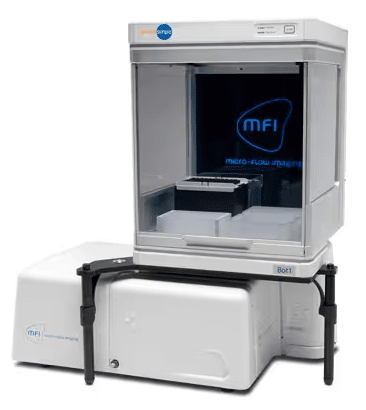
Image Source: ProteinSimple
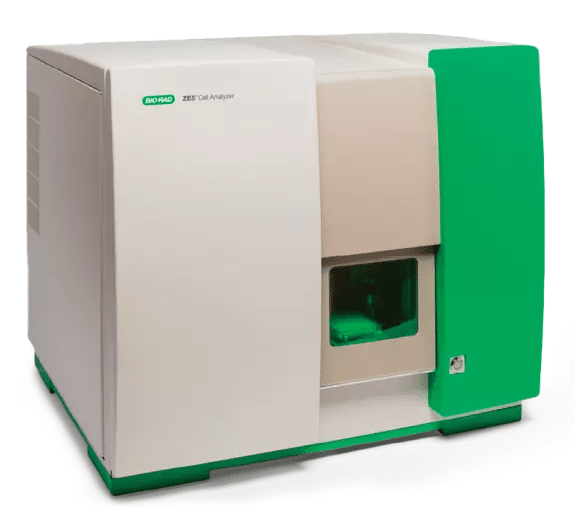
Image Source: BIO-RAD
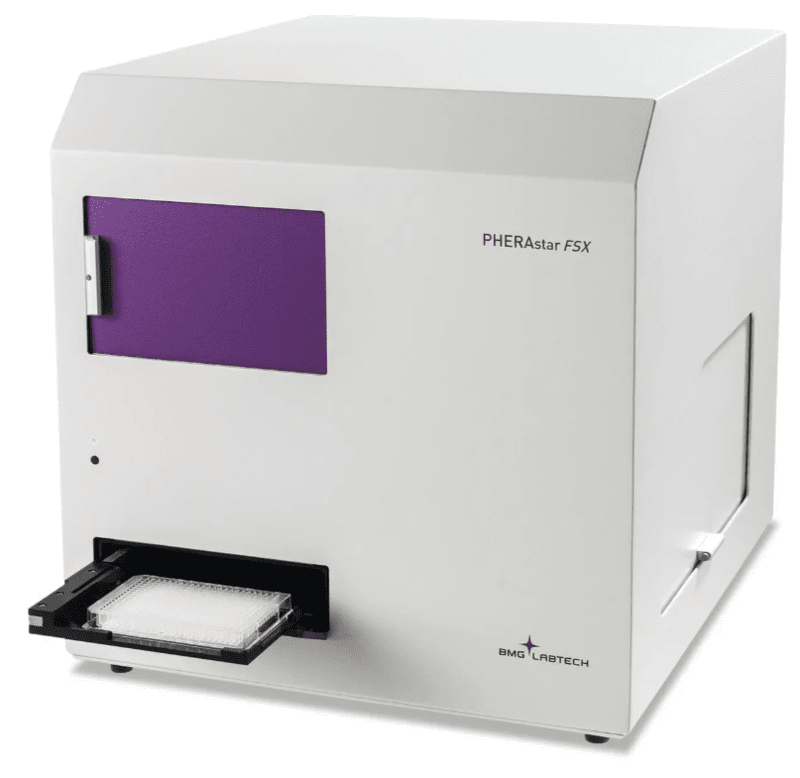
Image Source: BMG Labtech
How Our Exosome Functional Assay Workflow Work
We have developed a streamlined, collaborative workflow to ensure your project's success and deliver clear, actionable insights from start to finish.
Consultation and Experimental Design
Our PhD-level scientists work with you to understand your research goals and design a customized assay plan that best answers your scientific questions.
Exosome Isolation and QC (Optional)
We receive your samples or start with your cell lines/biofluids. We perform high-quality exosome isolation and full exosome characterization (NTA, Western Blot, TEM) to ensure the purity and concentration of the exosomes used in the assays.
Functional Assay Execution
Our expert team performs the selected functional assays using optimized protocols and appropriate recipient cell lines (customer-provided or commercially sourced).
Data Analysis and Interpretation
We conduct rigorous statistical analysis of the raw data. The results are interpreted in the context of your project's objectives.
Comprehensive Report Delivery
You receive a detailed report containing all methods, raw and processed data, high-quality figures and graphs, and a full scientific interpretation of the findings.
Starting a Project with Creative Biostructure
Proper sample preparation is critical for successful functional analysis. We provide clear guidelines and support for a wide range of biological sources.
Supported Sample Types
Our functional assays can be performed on exosomes isolated from a vast array of biological sources. If you have not yet isolated your exosomes, our expert team can perform high-purity isolation for you. We support:
- • Mammalian Sources: Including exosomes from Cell Culture Supernatants, various Biofluids (e.g., plasma, serum, urine, saliva), and Animal Tissues.
- • Microbial Sources: We are experienced in handling EVs from diverse microorganisms, such as Bacteria (BEVs), Fungi, and Protozoa.
- • Plant Sources: We also provide functional analysis for Plant-Derived Exosomes, a rapidly emerging area of research.
Sample Submission Guide
For optimal results, please follow our sample submission guidelines. We typically require a minimum of 50-100 μg of purified exosomes per assay group. Samples should be stored at -80°C and shipped on dry ice. Please contact us for a detailed sample submission form and shipping instructions.
Our Deliverables
- • A Detailed Project Report: Including all experimental procedures, parameters, and a full scientific interpretation of the results.
- • Raw and Processed Data: All raw data files and the statistically processed results in organized formats (e.g., Excel, Prism).
- • High-Quality Figures: Publication-ready graphs, charts, and images generated from the functional assays.
Case Study
Case: Exosome-Transmitted circRNA Drives Cisplatin Resistance in NSCLC
Background This study addresses a critical problem in non-small cell lung cancer (NSCLC): resistance to the chemotherapy drug cisplatin (DDP). The researchers hypothesized that resistant cancer cells might be transferring a specific circular RNA (circVMP1) to sensitive cells via exosomes, thereby "teaching" them how to become resistant.
Key Findings from Functional Assays
- • Increased Drug Resistance: Using CCK-8 viability assays, the study showed that when sensitive NSCLC cells were treated with exosomes from resistant cells, their survival rate in the presence of cisplatin dramatically increased, confirming the transfer of resistance.
- • Enhanced Malignant Behavior: A series of functional assays demonstrated that these exosomes also made the cancer cells more aggressive. EdU and sphere formation assays showed increased proliferation and self-renewal, while wound healing and Transwell assays revealed enhanced migration and invasion capabilities.
- • Suppressed Apoptosis: Flow cytometry analysis confirmed that cells receiving the circVMP1-rich exosomes were less likely to undergo apoptosis (programmed cell death) when treated with cisplatin, explaining their enhanced survival.
- • In Vivo Confirmation: The study culminated in an in vivo functional assay using a mouse tumor model. Mice treated with both cisplatin and the resistance-promoting exosomes had significantly larger tumors than mice treated with cisplatin alone, validating the in vitro findings in a living system.
Conclusion
Through a comprehensive suite of in vitro and in vivo functional assays, this study successfully demonstrated that exosome-mediated transfer of circVMP1 is a key mechanism driving cisplatin resistance and progression in NSCLC. This highlights the power of functional analysis to uncover disease mechanisms and identify potential new therapeutic targets.
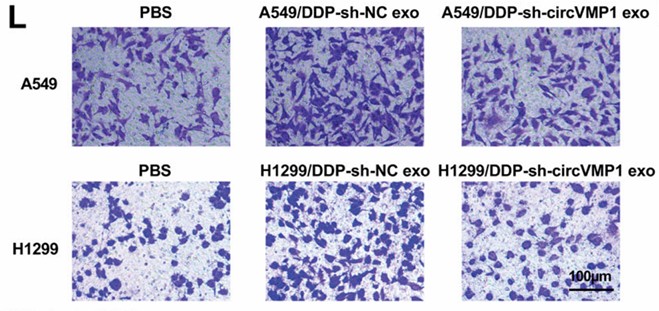
Figure 2. Exosome-mediated transfer of circVMP1 disseminates the chemo-resistance. Transwell assay was performed to assess the invasion capacity of NSCLC cells. (Xie H, et al., 2022)
Why Choose Our Exosome Functional Assays?
At Creative Biostructure, we combine advanced analytical platforms, tailored experimental design, and deep scientific expertise to ensure your exosome functional studies are insightful, reproducible, and impactful.
Comprehensive Assay Portfolio
We offer a wide spectrum of validated functional assays, from basic cellular responses to complex studies using organoids and 3D models, covering immunomodulation, drug delivery, and more.
Reliable Data & Actionable Insights
Our optimized protocols and stringent quality control generate robust and reproducible data, providing clear, actionable insights suitable for high-impact publications and therapeutic development.
Customizable Experimental Design
Every project is a collaboration. Our PhD-level scientists work directly with you to design and tailor assay strategies that align with your specific research questions and goals.
Advanced Platforms & Expert Analysis
We utilize state-of-the-art platforms, including high-content imaging and real-time cell analyzers, supported by expert data interpretation to translate complex results into meaningful conclusions.
What Our Customers Say
References
- Xie H, Yao J, Wang Y, et al. Exosome-transmitted circVMP1 facilitates the progression and cisplatin resistance of non-small cell lung cancer by targeting miR-524-5p-METTL3/SOX2 axis. Drug Deliv. 2022 Dec;29(1):1257-1271.
"The drug delivery and bioactivity validation assays were crucial for our pre-clinical study. The team provided clear data on exosome uptake and cargo release, which was essential for our IND filing. Their expertise in exosome function is unparalleled."
- Dr. Eleanor Vance, Principal Scientist, Oncology R&D
"We needed to understand the immunomodulatory function of our MSC-derived exosomes. The cytokine panel and macrophage polarization assays delivered exactly the insights we needed. The comprehensive report made interpreting the biological activity straightforward."
- Dr. Ben Carter, Head of Cell Therapy, Regenerative Medicine Inc.
"For our high-impact publication, data reproducibility was non-negotiable. The team's rigorous approach to their exosome functional assays gave us the confidence we needed. The results were robust and beautifully presented."
- Dr. Aisha Khan, Postdoctoral Fellow, Stanford University
"The anti-aging and cosmetic efficacy assays, especially the 3D skin model studies, provided compelling evidence of our product's physiological functions. This data was instrumental in securing our latest round of funding."
- CEO, Dermal Therapeutics
"The scientific consultation was as valuable as the assays themselves. The team helped us design the perfect experimental plan to validate the therapeutic potential of our exosomes. It felt like a true partnership."
- Dr. Kenji Tanaka, Director of Biology, NeuroPharma
"Transitioning from in vitro to in vivo functional assays was a major step. Their expertise in animal models and their detailed exosome tracing and tracking data were critical for demonstrating efficacy in a complex biological system."
- Dr. Maria Rodriguez, Senior Researcher, Cardiovascular Institute