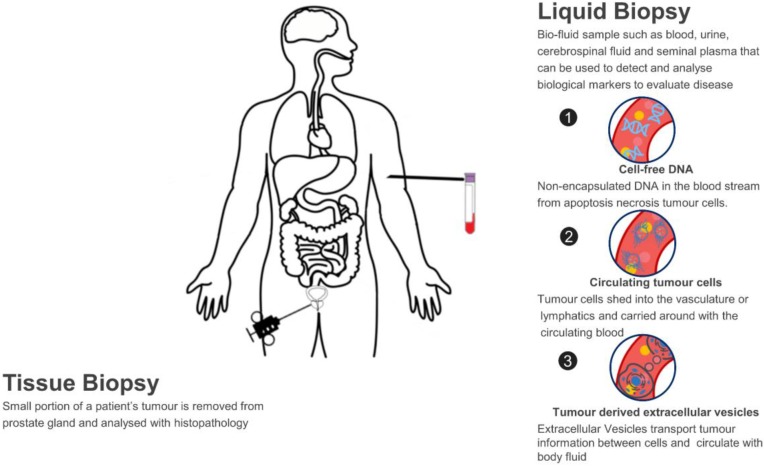
Liquid Biopsy via Exosomal miRNA/Protein
While cell-free DNA (cfDNA) provides a window into somatic mutations, it often fails to reflect the complex functional state of a tumor or organ. To understand disease progression, metastasis, and immune response, you need to look at the active machinery of the cell: RNA and Proteins.
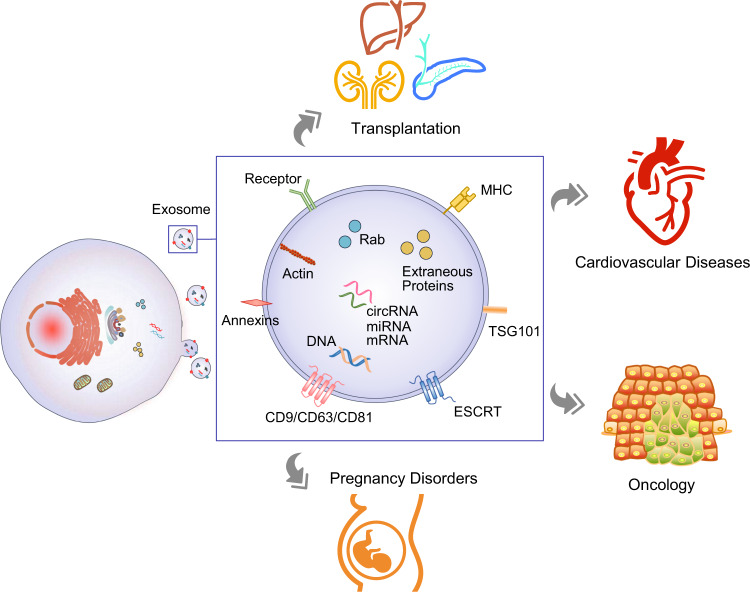
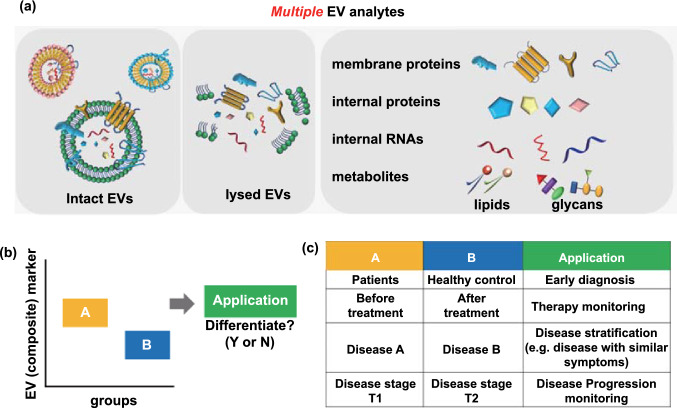
We provide specialized Exosomal miRNA and Protein Liquid Biopsy solutions. Exosomes are the ideal carriers for these fragile analytes, protecting them from degradation in the blood. Our platform enables the highly sensitive detection of tumor-specific surface proteins and regulatory microRNAs, providing a multi-dimensional view of disease that genetic sequencing alone cannot offer.
Why Target Exosomal miRNA and Proteins?
Exosomes offer unique biological advantages that make them superior to free-floating biomarkers for liquid biopsy applications.
- Stability & Protection: Free RNA degrades in seconds in blood. Exosomal miRNAs are encapsulated within a lipid bilayer, protecting them from RNases and allowing for the detection of signatures that would otherwise be lost.
- Tissue Specificity: Exosomal surface proteins (e.g., EpCAM, PSA, L1CAM) act as "zip codes," identifying the tissue of origin. This allows us to trace a signal back to a specific organ (e.g., prostate or brain), which is difficult with cfDNA.
- Early Detection: Changes in miRNA expression often precede genetic mutations or physical tumor growth. Exosomal miRNA profiles can serve as ultra-early warning systems for cancer and metabolic disorders.
- Functional Insight: Proteins and miRNAs reflect what the cell is doing, not just what mutations it has. This is critical for monitoring treatment responses, such as the downregulation of a pathway after drug administration.
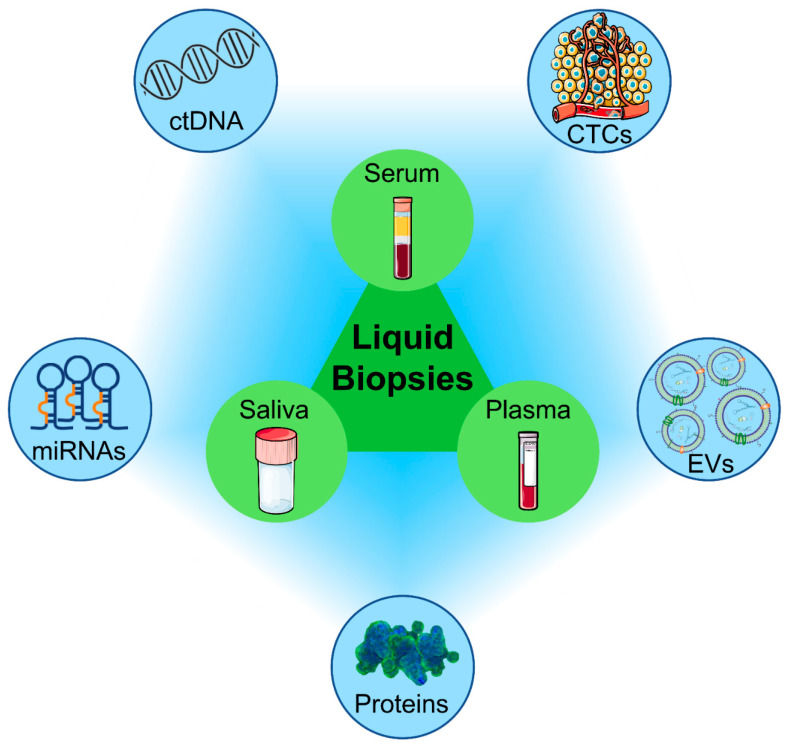 Figure 1. Liquid biopsy-based biomarkers. Abbreviations: CTCs—circulating tumor cells; ctDNA—circulating tumor DNA; miRNAs—microRNA; EVs—extracellular vesicles. (Gattuso G, et al., 2022)
Our Liquid Biopsy Development Workflow
We offer a dual-stream workflow optimized to extract and analyze both RNA and protein from clinical biofluids.
| Analysis Phase | Our Specialized Approach & Solution | Key Services Applied |
|---|---|---|
| Biofluid Processing | High-Purity Isolation: We utilize Size Exclusion Chromatography (SEC) or Immuno-Enrichment to isolate exosomes from plasma, serum, or urine. Crucially, we remove soluble proteins (like albumin) and lipoproteins that can interfere with downstream assays. | Biofluid Exosome Isolation, Exosome Isolation by Immunoaffinity Capture |
| Dual Extraction | Simultaneous Recovery: To maximize sample utility, we employ optimized lysis protocols to co-extract total RNA (including miRNA) and proteins from the same exosome pellet, enabling direct correlation of transcriptomic and proteomic data. | Exosome Multi-Omics Integration |
| High-Sensitivity Profiling | Quantification: For RNA, we use Small RNA Sequencing or digital PCR (dPCR) for absolute quantification. For proteins, we use High-Sensitivity ELISA, Western Blot, or Nano-Flow Cytometry to detect low-abundance surface markers. | Exosome Surface Marker Analysis, Exosome Characterization by NanoFCM |
| Validation & Analysis | Signature Verification: We validate candidate markers in independent cohorts. Our bioinformatics team analyzes the data to construct multi-analyte diagnostic scores for improved sensitivity. | Custom Exosome Panels for Disease Biomarkers |
Core Technologies for Analyte Profiling
We deploy specific technologies tailored to the unique properties of short RNAs and membrane proteins.
Exosomal Small RNA Sequencing (NGS)
Comprehensive miRNA Discovery: We don't just look for known targets. Our NGS platform is optimized to capture the full spectrum of small non-coding RNAs (miRNA, piRNA, tsRNA). We use specialized library preparation methods to mitigate the "adapter dimer" issues common in low-input liquid biopsy samples, ensuring high-quality reads.
High-Sensitivity Immunoassays (ELISA & Simoa)
Protein Quantification: Detecting tumor-derived proteins in blood is challenging due to dilution. We utilize ultra-sensitive immunoassay platforms capable of detecting femtogram levels of exosomal surface proteins (e.g., PD-L1, HER2), enabling detection even at early disease stages.
Digital PCR (dPCR) Validation
Absolute Quantification: For validating miRNA candidates, standard qPCR can be variable. We offer Digital PCR (dPCR) services, which partition the sample into thousands of micro-reactions. This provides absolute quantification of miRNA copy numbers without the need for standard curves, offering the precision required for clinical diagnostics.
Application Spotlight: Exosomal vs. Plasma miRNA for Liver Cancer Detection
This analysis demonstrates why isolating exosomes yields superior diagnostic accuracy compared to analyzing total plasma or traditional protein markers.
Featured Technologies:
- Serum Exosome Isolation
- miRNA Quantification (qPCR)
- Diagnostic Panel Validation
Literature Interpretation:
Diagnosing Hepatocellular Carcinoma (HCC) early is difficult; the standard marker Alpha-fetoprotein (AFP) often misses early cases. Researchers asked: Is exosomal miRNA a better tool than AFP or free-floating plasma miRNA? They isolated exosomes from serum and measured a specific 3-miRNA panel (miR-122, miR-21, miR-96).
The study found that exosomal miRNAs significantly outperformed both total plasma miRNAs and AFP. The exosomal 3-miRNA panel achieved a diagnostic AUC of 0.924, detecting cancer with much higher sensitivity (82%) and specificity (92%) than the traditional methods. This confirms that the protective environment of exosomes preserves critical diagnostic signals that are lost or diluted in whole plasma.
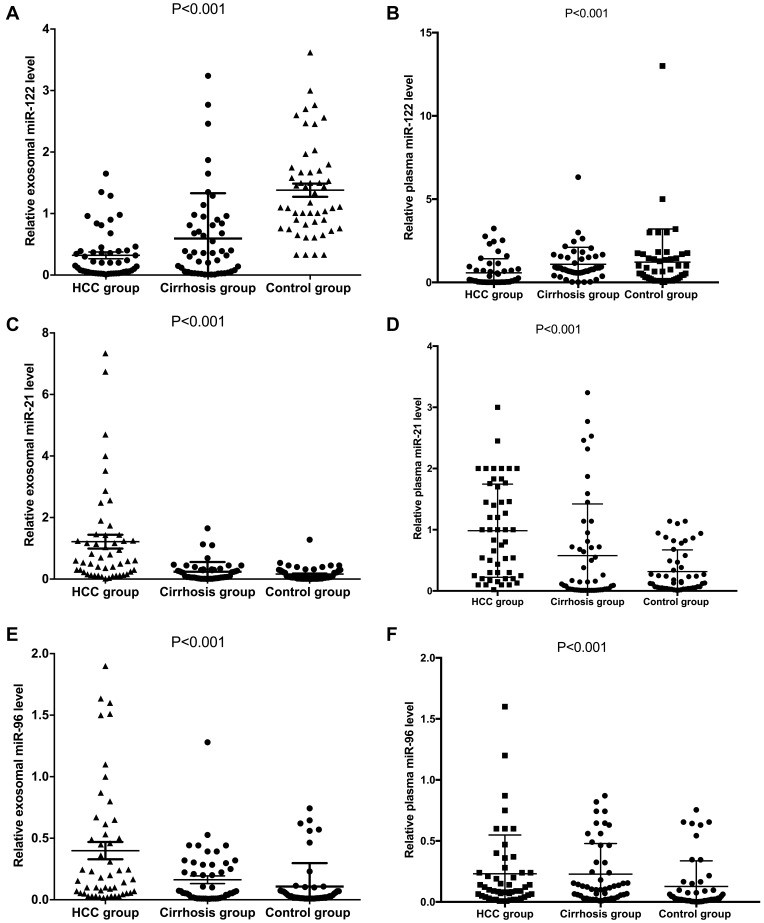 Figure 2. Comparing expression levels of miRNA-122, miRNA-21 and miRNA-96 in both plasma and exosomes among the three groups. (A, C, E) miRNA levels in plasma and (B, D, F) exosomal levels. (Wang S, et al., 2021)
Start Your Liquid Biopsy Project
We make getting started straightforward. Our process is designed to be collaborative and transparent.
How It Works: Our Project Pathway
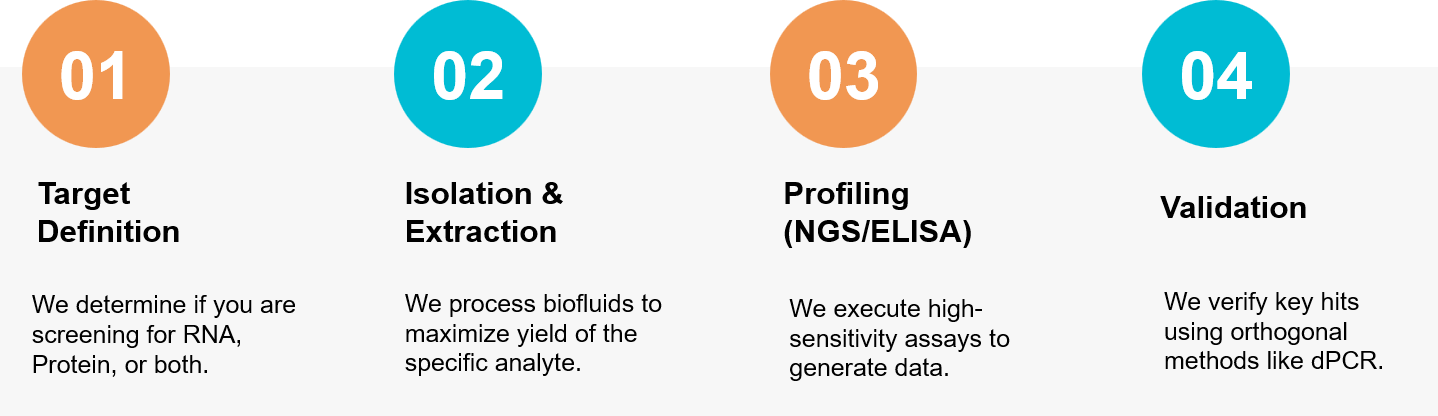 Figure 3. Our integrated workflow for the simultaneous extraction and analysis of exosomal RNA and protein biomarkers from clinical samples. (Creative Biostructure)
Ready to unlock the proteomic and transcriptomic layers of liquid biopsy? Our scientific team is available for a free consultation to discuss your miRNA or protein profiling strategy. Contact us today to discuss your project.
References
- Gattuso G, Crimi S, Lavoro A, et al. Liquid Biopsy and Circulating Biomarkers for the Diagnosis of Precancerous and Cancerous Oral Lesions. Noncoding RNA. 2022 Aug 10;8(4):60.
- Wang S, Yang Y, Sun L, et al. Exosomal MicroRNAs as Liquid Biopsy Biomarkers in Hepatocellular Carcinoma. Onco Targets Ther. 2020 Mar 9;13:2021-2030.