Exosome ASO Delivery
Antisense Oligonucleotides (ASOs) hold the power to modulate gene expression at the nuclear level, but their clinical potential is often limited by poor biodistribution and dose-limiting toxicity. Naked ASOs accumulate heavily in the kidney and liver, causing renal toxicity and thrombocytopenia, while struggling to cross biological barriers like the Blood-Brain Barrier (BBB).
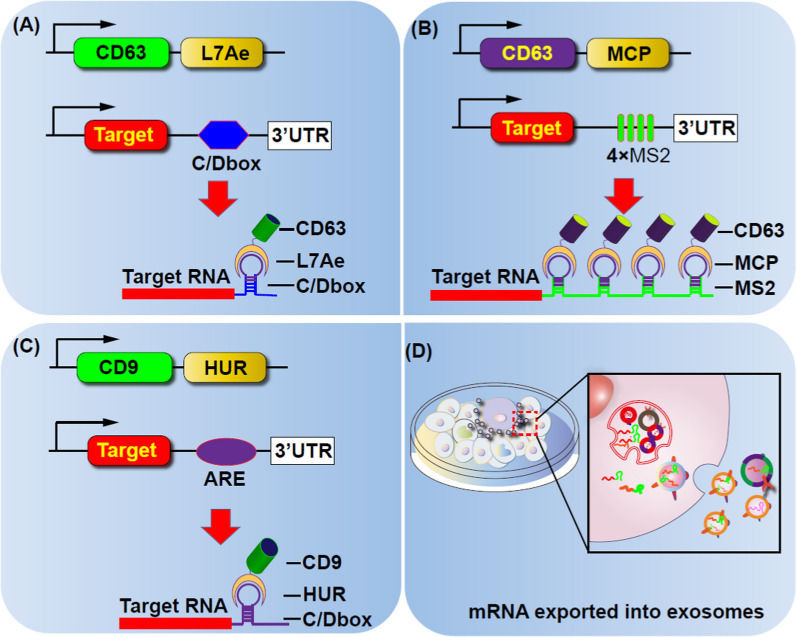
We provide specialized Exosome ASO Delivery Solutions. By encapsulating your Gapmers, PMOs, or 2'-MOE oligonucleotides into engineered exosomes, we transform their pharmacokinetic profile. Our platform protects the ASO from renal clearance, facilitates endosomal escape, and actively transports the payload to the nucleus, unlocking the full therapeutic potential of your sequence.
Why Exosomes for ASO Delivery?
Unlike lipid nanoparticles (LNPs) or naked administration, exosomes offer a biological solution to the specific challenges of oligonucleotide delivery.
- Reducing Renal Toxicity: "Naked" ASOs are rapidly cleared by the kidney. Encapsulating them in exosomes increases their circulation time and prevents accumulation in proximal tubule cells, significantly widening the therapeutic window.
- Solving Endosomal Entrapment: The major bottleneck for ASO efficacy is getting out of the endosome. Exosomes utilize natural membrane fusion mechanisms to release their cargo into the cytoplasm, facilitating nuclear entry.
- Brain & Tissue Access: Exosome-encapsulated ASOs can cross the blood-brain barrier (BBB), enabling the treatment of neurodegenerative diseases (e.g., Huntington's, SMA) that unmodified ASOs cannot reach effectively.
- Nuclear Localization: Many ASO mechanisms (like RNase H recruitment or splice switching) occur in the nucleus. Exosomes deliver cargo intracellularly, improving the efficiency of nuclear trafficking compared to other nanocarriers.
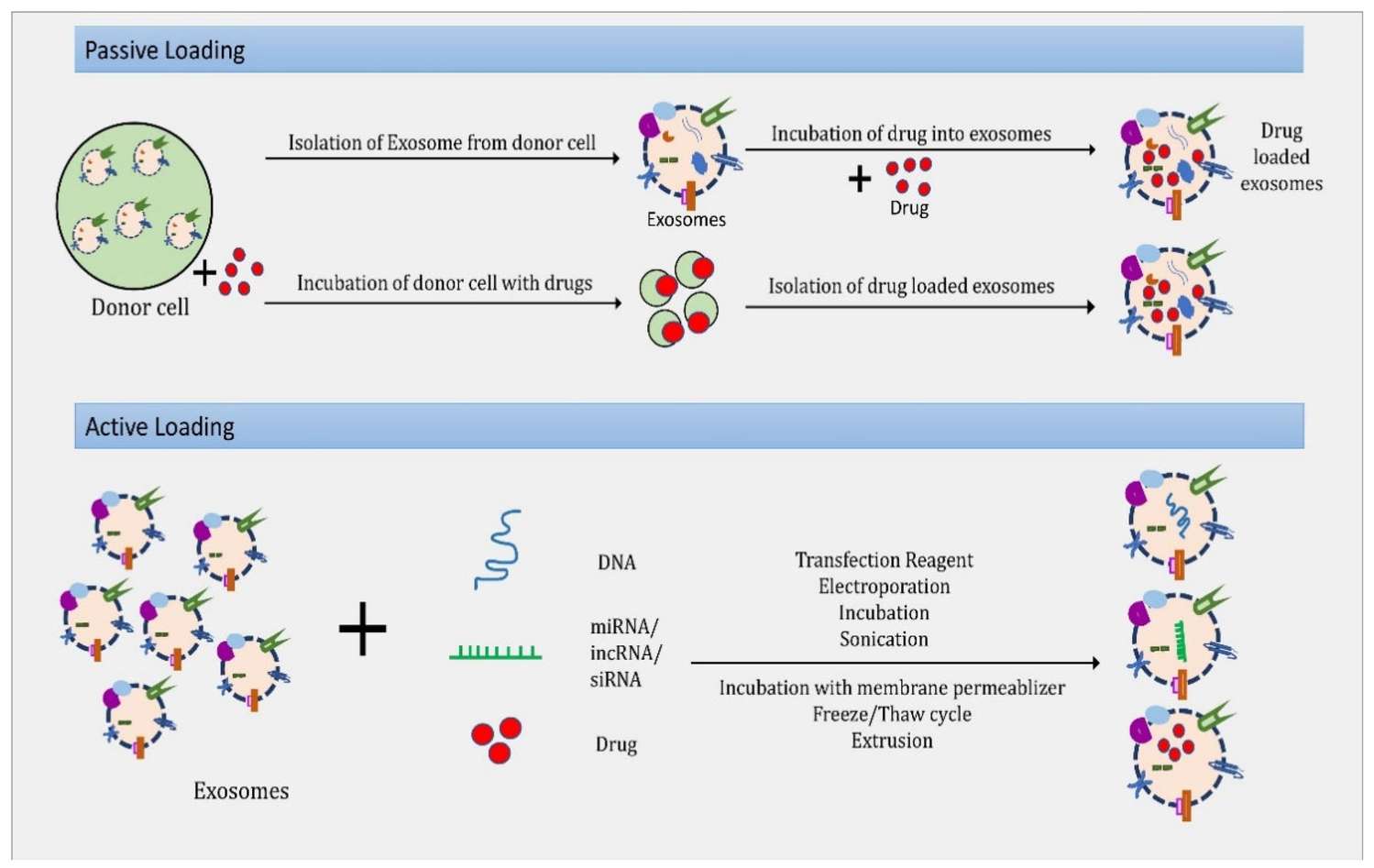
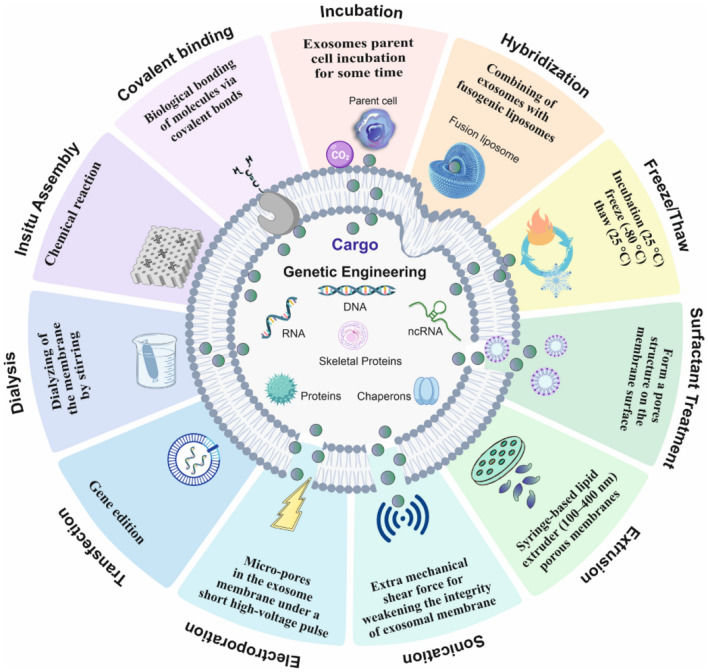 Figure 1. Physical treatment methods for enhancing exosome cargo loading. Techniques include surfactant treatment, sonication, electroporation, extrusion, freeze–thaw cycles, and dialysis. (Sadeghi S, et al., 2023)
Our Specialized ASO Delivery Capabilities
ASO chemistries (charged vs. uncharged) vary wildy. Our platform is optimized to load and deliver the specific chemistry you are working with.
| ASO Chemistry / Mechanism | Our Specialized Approach & Solution | Key Services Applied |
|---|---|---|
| Gapmers (RNase H Mediated) | Potent Gene Silencing: We optimize loading buffers to prevent aggregation of charged Gapmers. We validate success by measuring nuclear mRNA knockdown and confirming the reduction of the target protein. Crucially, we assess the reduction of pro-inflammatory effects often caused by naked Gapmers. | Exosome Cellular Functional Assays |
| PMO / PNA (Splice Switching) | Exon Skipping & Inclusion: Charge-neutral backbones like PMOs are difficult to load with standard reagents. We utilize proprietary electroporation and surfactant-assisted loading protocols. Efficacy is validated using splice-switching reporter assays (e.g., Luciferase correction) to prove nuclear activity. | Exosome Dual-luciferase Reporter Gene Assay |
| Steric Blockers (2'-MOE, LNA) | miRNA Inhibition: We deliver steric-blocking ASOs to sequester pathogenic miRNAs or block upstream open reading frames (uORFs). Our workflow includes functional assays to verify the de-repression of downstream targets. | Exosomal Small RNA and miRNA Sequencing |
Core Technologies for Your ASO Program
We have built our platform around the technical "pain points" of oligonucleotide development.
Active Loading via Electroporation
High Encapsulation Efficiency: Passive incubation rarely works for ASOs. We utilize optimized electroporation protocols tailored to the length and charge of your oligo. We carefully control voltage and buffer conditions to maximize ASO loading efficiency without causing exosome aggregation or membrane damage.
Targeted Delivery Engineering
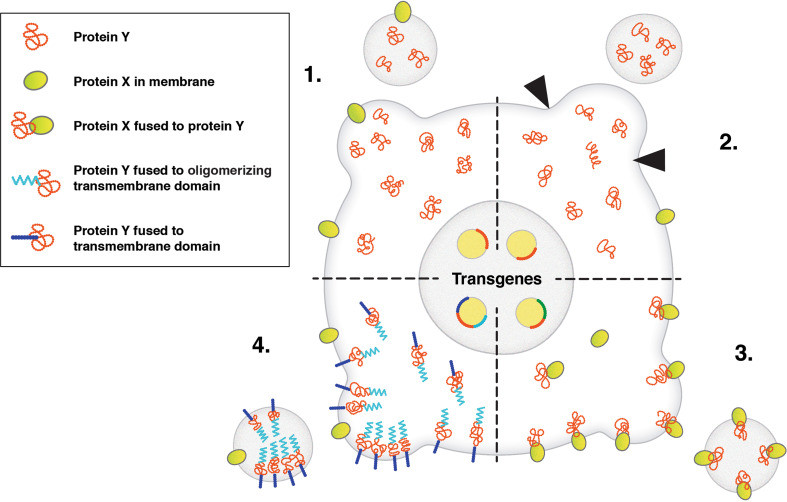
Precision Homing: To treat muscle diseases (like DMD) or CNS disorders, systemic delivery isn't enough. We engineer exosomes to display muscle-targeting peptides or brain-homing ligands (e.g., RVG, Transferrin). This active targeting ensures your ASO reaches the specific tissue where splicing or silencing is needed.
Nuclear Delivery Validation
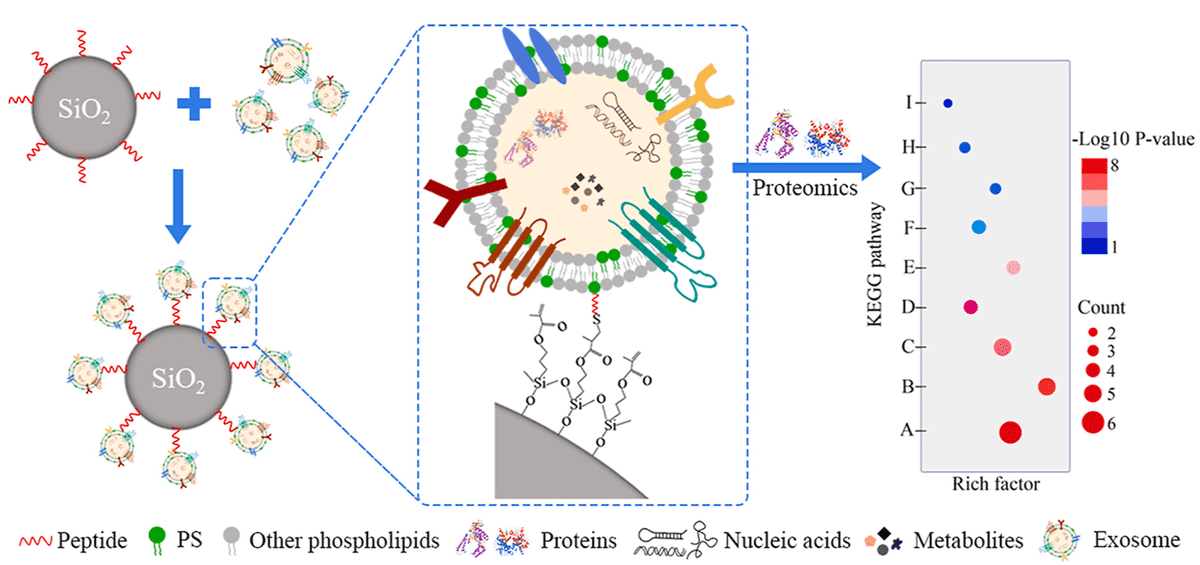
Proof of Mechanism: For an ASO to work, it must reach the nucleus. We provide high-resolution confocal microscopy and subcellular fractionation assays. We track fluorescently labeled ASOs to demonstrate successful endosomal escape and nuclear accumulation, distinguishing our service from simple "uptake" assays.
Application Spotlight: Targeted ASO Delivery to Cancer Cells
This analysis highlights how engineering the exosome surface can solve the cellular uptake problem for Antisense Oligonucleotides (ASOs).
Featured Technologies:
- Exosome Surface Engineering (Peptides)
- Active ASO Loading
Literature Interpretation:
The challenge was to deliver a therapeutic ASO targeting Bcl-2 (an anti-apoptotic gene) specifically to liver cancer cells. Naked ASOs struggle to penetrate the cell membrane efficiently. Researchers developed a peptide-equipped exosome platform. They conjugated a cell-penetrating peptide (R9) to the exosome surfaceand loaded the ASO. The engineered exosomes ("EXO-R9-ASO") showed remarkably higher cellular uptake compared to unmodified exosomes or naked ASO. This enhanced delivery led to efficient downregulation of the Bcl-2 gene and significant tumor cell apoptosis. This outcome demonstrates that equipping exosomes with targeting peptides is a critical strategy for maximizing ASO potency, aligning with the technical approaches available through our Targeted Engineering & Loading platform.
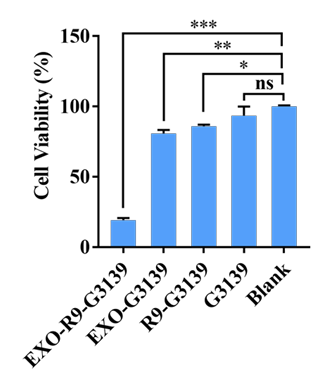 Figure 2. Cell viability of HepG2 after 24 h treatment with different agents. EXO-R9-G3139 showed lowest viability (19.24%) due to exosome and R9 peptide synergy. (Xu H, et al., 2021)
Start Your ASO Delivery Project
We make getting started straightforward. Our process is designed to be collaborative and transparent.
How It Works: Our Project Pathway
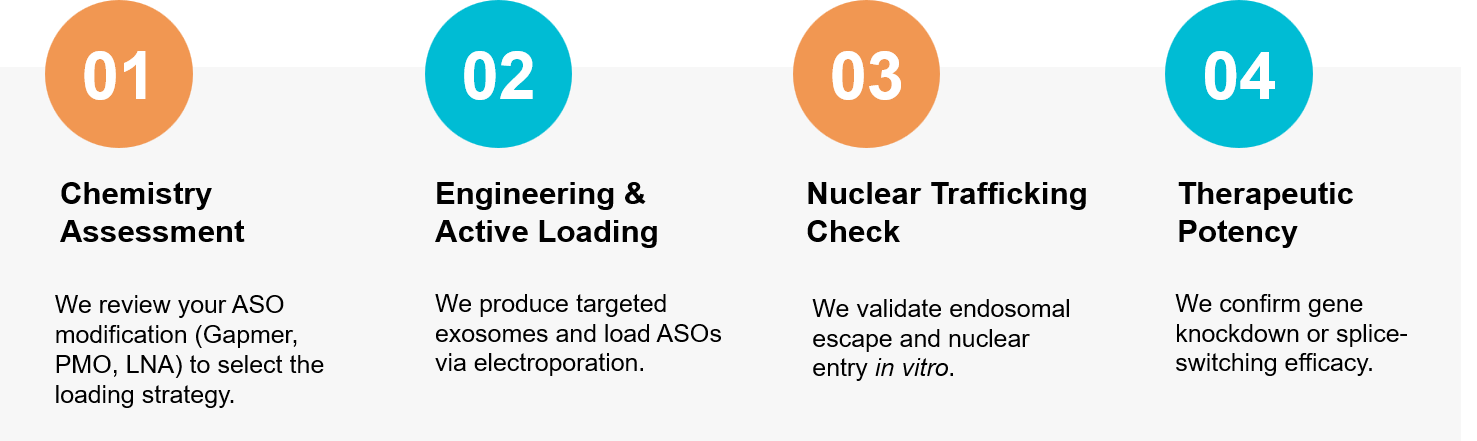 Figure 3. Our streamlined process for encapsulating Antisense Oligonucleotides (ASOs) to enhance nuclear delivery and reduce toxicity. (Creative Biostructure)
Ready to overcome the renal clearance barrier for your oligonucleotide? Our scientific team is available for a free consultation to discuss your ASO delivery strategy. Contact us today to discuss your project.
References
- Sadeghi S, Tehrani FR, Tahmasebi S, et al. Exosome engineering in cell therapy and drug delivery. Inflammopharmacology. 2023 Feb;31(1):145-169.
- Xu H, Liao C, Liang S, et al. A Novel Peptide-Equipped Exosomes Platform for Delivery of Antisense Oligonucleotides. ACS Appl Mater Interfaces. 2021 Mar 10;13(9):10760-10767.