Exosome PEGylation and Stealth Coating Services
Exosomes are increasingly explored as natural nanocarriers for biomolecule delivery and functional studies. However, their rapid clearance by the mononuclear phagocyte system and susceptibility to aggregation in biological environments can significantly limit their performance in downstream applications.
Exosome PEGylation and stealth coating strategies offer effective solutions to these challenges by modifying the vesicle surface to reduce immune recognition, improve colloidal stability, and extend circulation time in complex biological systems.
At Creative Biostructure, we provide customized exosome PEGylation and stealth coating services to support research in drug delivery, biomaterials, and extracellular vesicle engineering. Our solutions are designed to enhance exosome stability and functionality while maintaining structural integrity and bioactivity.
What Is Exosome PEGylation and Stealth Coating
Exosome PEGylation
PEGylation refers to the attachment of polyethylene glycol (PEG) chains onto the surface of exosomes. This hydrophilic polymer forms a protective steric barrier, minimizing protein adsorption and reducing immune system recognition.
Stealth Coating
Stealth coating encompasses broader surface engineering strategies that enable exosomes to evade biological clearance mechanisms. In addition to PEG, this may include zwitterionic materials, polysaccharides, or biomimetic surface layers.
These modifications can significantly alter exosome-biological interactions, leading to improved stability, reduced aggregation, and enhanced delivery performance in research applications.
Why PEGylation and Stealth Coating Matter
- Prolonged circulation time in biological systems
- Reduced opsonization and immune clearance
- Improved stability in serum and physiological environments
- Minimized aggregation and nonspecific interactions
- Enhanced delivery efficiency of encapsulated cargos
- Improved reproducibility in downstream experiments
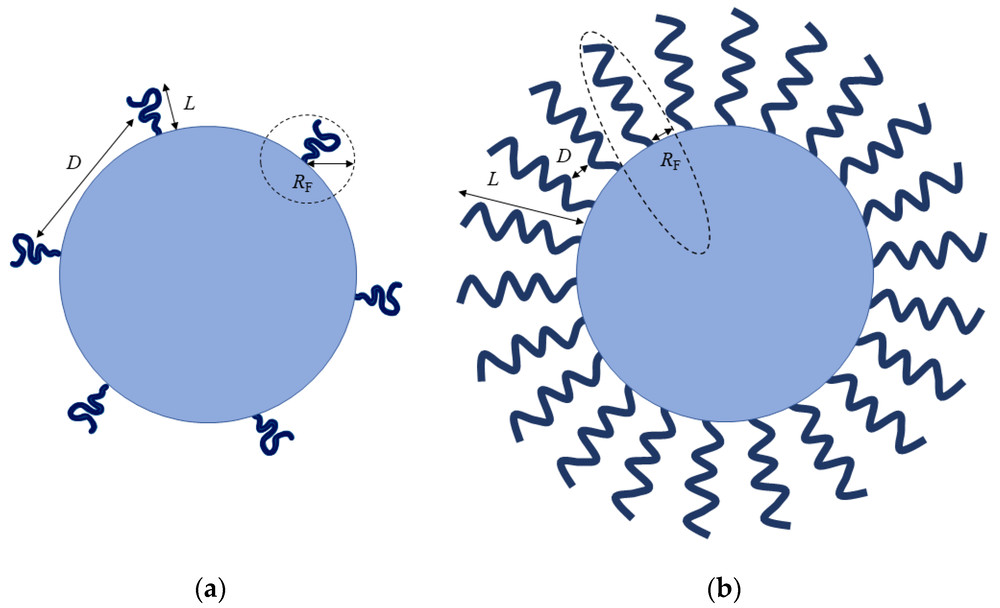 Figure 1. PEGylation on exosomes showing mushroom and brush conformations at different PEG surface densities. (Fam S Y, et al., 2020)
Our Exosome PEGylation and Stealth Coating Strategies
We offer multiple engineering approaches tailored to your exosome type, cargo, and application goals:
Covalent PEGylation
- NHS ester and maleimide-based conjugation
- Stable attachment to membrane proteins or lipids
- Controlled PEG chain length and density
Lipid-PEG Insertion (Post-Insertion Method)
- Incorporation of PEGylated lipids into exosome membranes
- Mild processing conditions to preserve vesicle integrity
- Suitable for scalable workflows
Non-Covalent Surface Coating
- Electrostatic or hydrophobic interactions
- Flexible and reversible modification strategies
Biomimetic Stealth Coating
- Zwitterionic coatings for ultra-low fouling
- Polysaccharide-based coatings (e.g., hyaluronic acid)
- Protein corona engineering for biological mimicry
Hybrid Functionalization Strategies
- PEGylation combined with targeting ligands
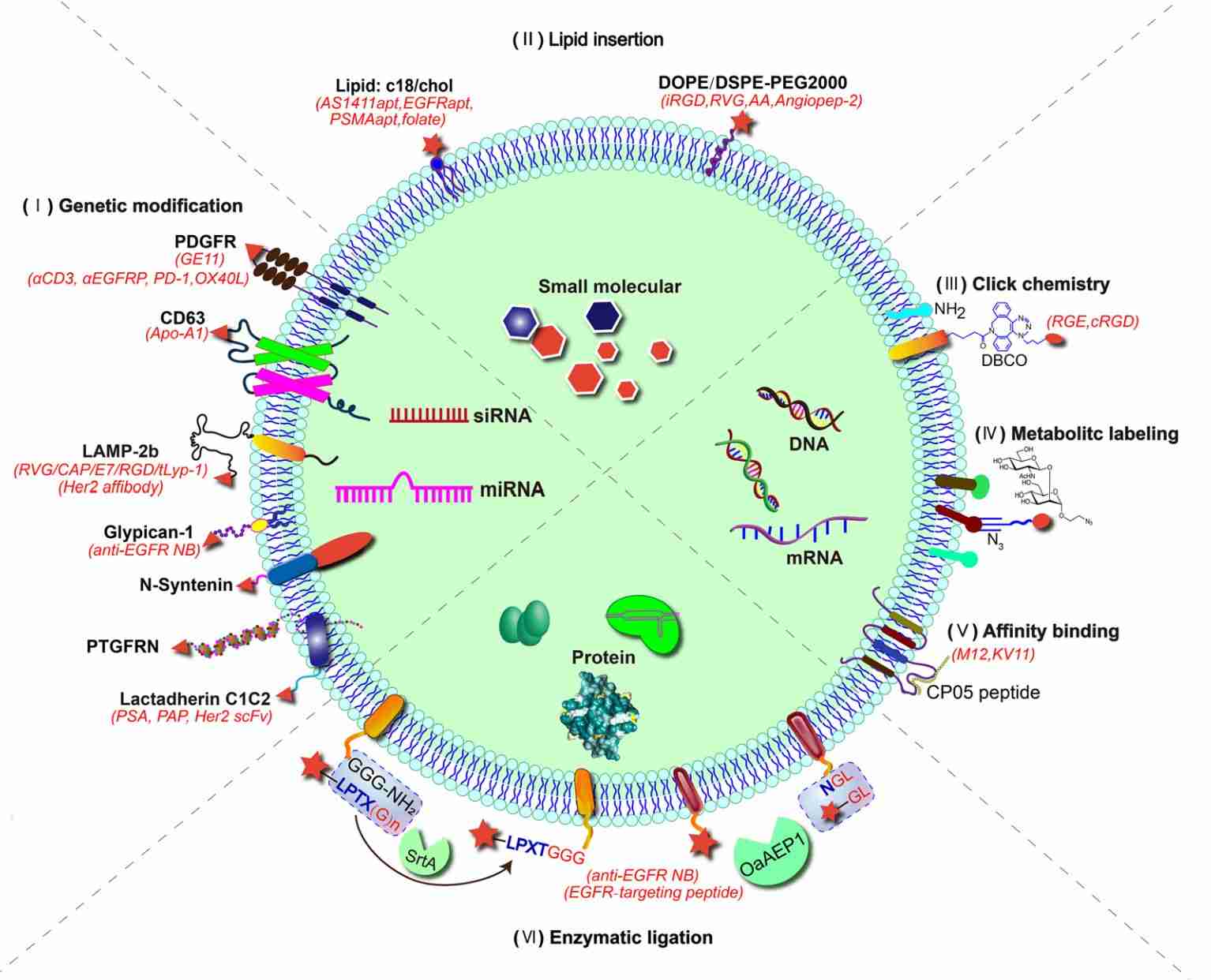
- Dual modification with peptides, antibodies, or aptamers
- Tunable balance between stealth and targeting performance
Workflow of Our PEGylation and Stealth Coating Service
Consultation & Project Design
Evaluation of exosome source, intended application, and coating strategy
Exosome Preparation or Client Sample Assessment
Use of client-provided samples or in-house exosome production
PEGylation / Coating Optimization
Optimization of PEG type, density, and coating conditions
Characterization & Quality Control
Comprehensive validation of surface modification and vesicle properties
Delivery & Technical Support
Delivery of engineered exosomes with full documentation and support
 Figure 2. Workflow of Exosome PEGylation and Stealth Coating Service. (Creative Biostructure)
Characterization and Quality Control
We provide rigorous analytical validation to ensure consistency and quality:
Applications of PEGylated and Stealth-Coated Exosomes
Our engineered exosomes support a wide range of research applications:
- Drug delivery system development
- Nucleic acid delivery and gene modulation studies
- Protein and peptide transport research
- Exosome pharmacokinetics and biodistribution studies
- Biomaterial and nanocarrier design
- Targeted delivery optimization in vitro
How to Start Your Project
You can initiate your project in two ways:
| Option 1: Provide Your Own Exosomes |
|
| Option 2: Use Our Exosome Production Services |
|
What Deliverables Will You Receive
| Category | Deliverables |
|---|---|
| Engineered Exosomes | PEGylated or stealth-coated exosomes |
| Physicochemical Data | Size distribution, zeta potential, morphology |
| Surface Characterization | PEG modification confirmation and density analysis |
| Stability Data | Serum stability and aggregation assessment |
| Technical Report | Detailed methodology, optimization parameters, and results |
Why Choose Creative Biostructure
- Extensive experience in extracellular vesicle engineering
- Multiple PEGylation chemistries and coating platforms
- Customizable stealth coating design for diverse applications
- Integrated end-to-end service capabilities
- High reproducibility and research-grade quality standards
Case Study
Case: PEGylation-Enabled Stealth Exosomes for Enhanced Stability
Background
Exosomes often suffer from rapid clearance by the mononuclear phagocyte system (MPS), limiting their stability and circulation time. While PEGylation can reduce immune recognition, it may also decrease cellular uptake, creating a functional trade-off.
Strategy
Exosomes were surface-modified using a PEG-based stealth coating (mPEG2000-TK-CP05):
- PEG chains anchored via CD63-binding peptide (CP05)
- ROS-responsive linker (TK) enabled controlled PEG removal
- Mild modification preserved exosome structure
This approach generated stealth exosomes with tunable surface properties.
Key Findings
- Improved stability: PEGylation increased dispersion stability and reduced aggregation
- Reduced nonspecific uptake: Lower macrophage uptake compared to native exosomes
- Prolonged circulation: Enhanced retention and reduced rapid clearance in vivo
- Maintained integrity: Exosome morphology and protein markers remained unchanged
Conclusion
PEGylation-based stealth coating effectively improves exosome stability, reduces immune clearance, and enhances circulation behavior. Advanced strategies, such as stimuli-responsive PEG systems, further enable controlled surface functionality for optimized delivery performance.
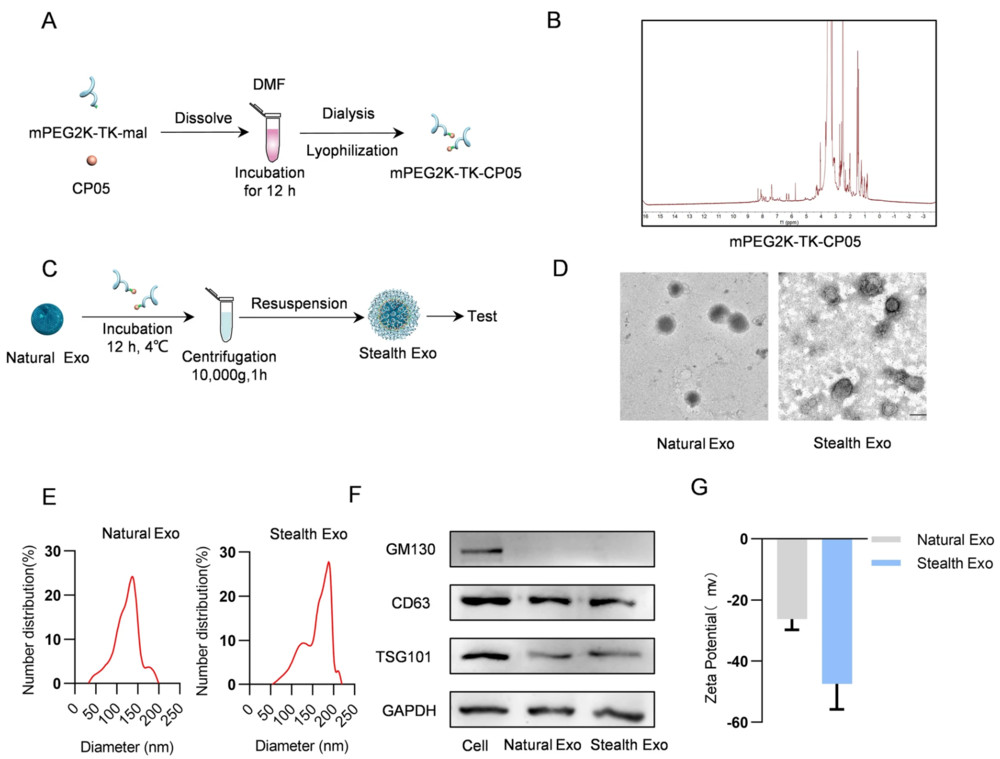 Figure 3. Workflow and characterization of PEGylated exosomes including synthesis, TEM imaging, size distribution, and surface analysis. (Wan Z, et al., 2022)
Enhance the stability and performance of your exosome-based systems with our advanced PEGylation and stealth coating solutions. Our team will work closely with you to design a strategy tailored to your research goals. Contact us to discuss your project and receive a customized solution.
References
- Fam S Y, Chee C F, Yong C Y, et al. Stealth coating of nanoparticles in drug-delivery systems. Nanomaterials. 2020, 10(4): 787.
- Wan Z, Gan X, Mei R, et al. ROS triggered local delivery of stealth exosomes to tumors for enhanced chemo/photodynamic therapy. Journal of Nanobiotechnology. 2022, 20(1): 385.
Frequently Asked Questions
For any inquiries, our support team is ready to help you get technical support for your research and maximize your experience with Creative Biostructure.